
Wall Street Is Quietly Exiting AI
The $5 Billion Loan Goldman & JPMorgan Refused to Hold
Felix Nikolas Prehn · 14 October 2026 · 11 pages
Bottom line
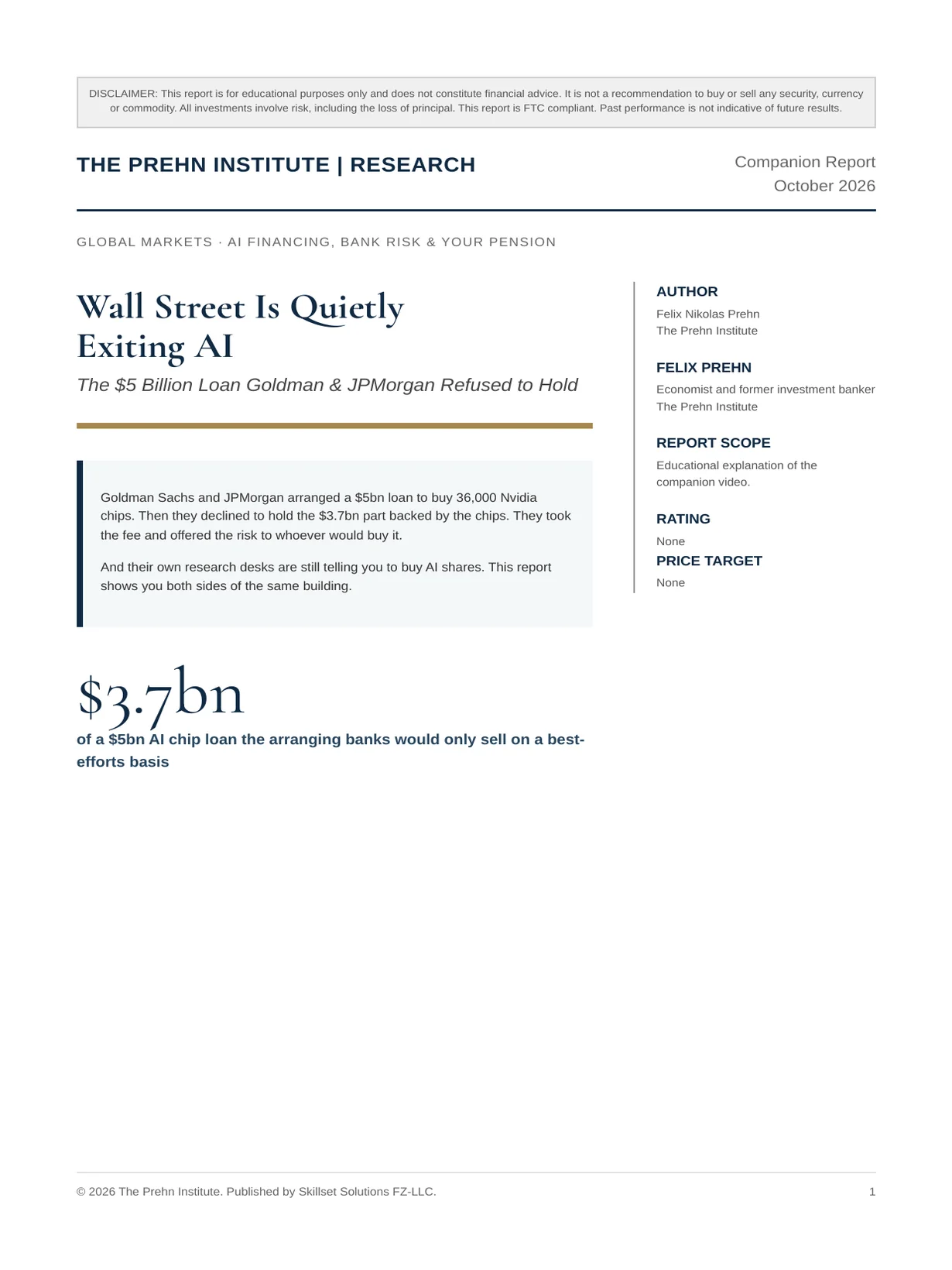
Goldman Sachs and JPMorgan arranged a $5bn loan to buy 36,000 Nvidia chips. Then they declined to hold the $3.7bn part backed by the chips. They took the fee and offered the risk to whoever would buy it. And their own research desks are still telling you to buy AI shares. This report shows you both sides of the same building.
$3.7bnof a $5bn AI chip loan the arranging banks would only sell on a best-efforts basis
Bottom Line
Executive summary
Bottom line. Goldman Sachs and JPMorgan arranged a $5bn loan for Volta, a young AI company buying 36,000 Nvidia chips. Then they refused to hold the $3.7bn slice backed by those chips. And that slice pays around 11%, well above the 8.3% average on US junk bonds. Meanwhile Oracle's default insurance costs the most since 2009, and Meta has moved $27bn of AI spending off its balance sheet. So the research notes tell you to buy. But the loan desks are quietly passing the risk to pension funds, insurers and, in the end, you.
- Bank arranges the AI loan
- Fee is paid when the deal closes
- Loan is sold to pension funds and insurers
- The risk ends up in your retirement savings
The trigger
A loan the banks wouldn't keep. Of the $5bn, only $1.3bn backed by leases and cash was underwritten. The $3.7bn backed by the chips went out on a best-efforts basis. So the banks will try to sell it. And if they can't? It's not their problem. It might become yours.
The split
Two messages from one bank. Goldman's analysts publish buy notes on AI names. And Goldman's traders told their institutional clients that investors had “continued to de-risk from AI-capex and AI-financing exposure.” Which one do you think was meant for you?
The pattern
Risk is moving down the chain. JPMorgan and Morgan Stanley are moving AI loans off their books and are approaching their internal limits for AI exposure. And Oracle's lenders are selling at a discount. Meta has used a special purpose vehicle to move $27bn off its main balance sheet.
What to do
Read the loan pricing, not the analyst note. Find out whether your pension holds private credit. And watch what the lenders charge, because the price of a loan tells you what the people closest to the deal really think.
How Wall Street Actually Makes Money
The business model: fee now, risk later
- 2 to 3%
- typical arranging fee on a large loan, paid upfront
- $100m+
- what that means on a $5bn deal
- Day one
- when the fee is earned, whether or not the loan is repaid
When a bank arranges a loan, it earns a fee. And when it publishes a price target and you act on it, it earns fees from the trading that follows.
Whether you win or lose doesn't change what the bank is paid. So your result is a side effect.
Think of a car salesman. He earns the same commission whether your car lasts a decade or breaks down in 6 months. The sale is the product. What happens to you after it isn't his department.
Why the bank sells the loan
Holding a loan ties up capital. The bank has to set aside reserves in case the borrower defaults, and that's expensive.
So once the deal is done, the bank sells the loan on. To pension funds. To insurers. To private credit funds that manage retirement savings for people like you.
The fee stays. The risk leaves.
Is any of this illegal? No. It's how leveraged buyouts work. It's how the mortgage market worked in 2005 and 2006. And it's how the AI chip loan market works today.
What it does to the information you get
The analyst who covers Meta sits in a different part of the bank from the banker arranging AI loans. They're legally separate.
But they work for the same firm. And that firm earns money from your transactions, not from your returns.
So a “strong buy” note can be accurate and still come from a machine that earns when you act on it. Keep both facts in your head at once. It's the most protective habit you can build.
The Cheerleading
The cheerleading: what the research desks say
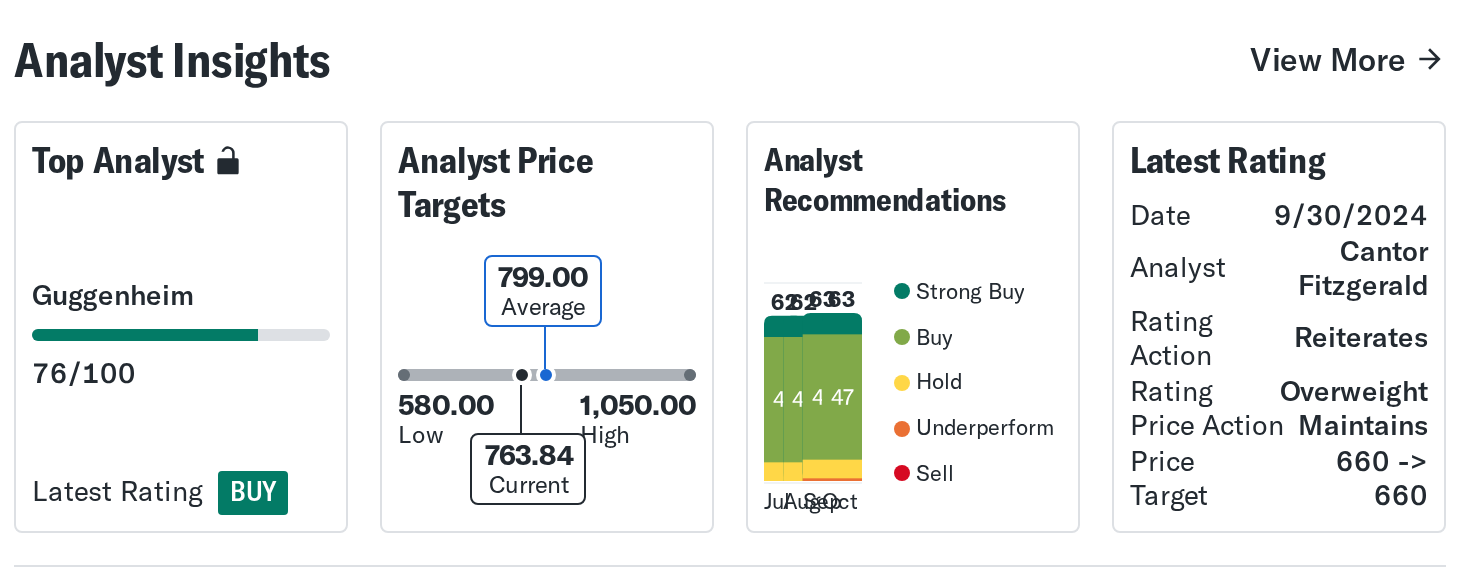
BNP Paribas has a Meta target of $885, published in October 2026, with the shares around $763. Truist says $1,000. So if you own Meta, they're telling you it's still cheap.
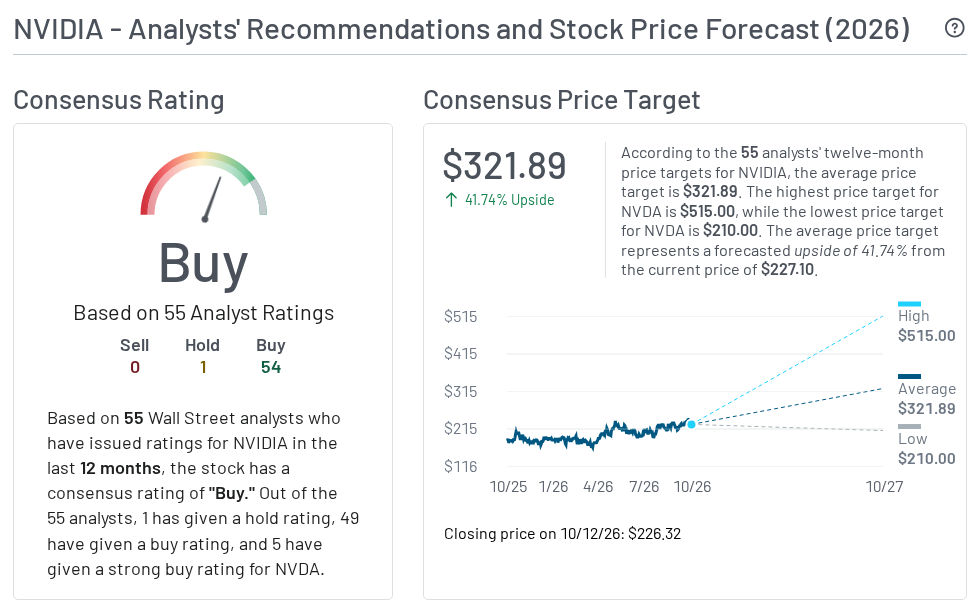
Cantor Fitzgerald puts Micron, a memory chip supplier to the AI industry, at $2,000. And across 55 analysts covering Nvidia, the verdict is almost one word: buy.
Are they lying? No. Some of these targets may prove right. But each one is also a commercial signal. You see it quoted in headlines, newsletters and podcasts, and that keeps the mood warm.
Why does the bank care? Because a warm mood lets new share offerings and loan sales clear. So the price target works like plumbing for the deal pipeline.
The note you weren't sent
Goldman's traders, not its analysts, wrote to institutional clients that investors had “continued to de-risk from AI-capex and AI-financing exposure.”
One firm. One week. The analysts say buy. The traders say de-risk. And only one of those messages is aimed at you.
What They Are Actually Doing
The evidence: Volta, Oracle and Meta
- ~11%
- rate on the Volta chip-backed loan
- 8.3%
- average yield on US high-yield (junk) bonds
- 2009
- last time Oracle's default insurance cost this much
Volta Infrastructure
Volta was founded in 2026. It began in Bitcoin mining, backed by Bitdeer, and has pivoted to AI with a 6-year computing contract from Anthropic and 36,000 Nvidia GPUs.
Goldman and JPMorgan arranged a $5bn loan. They underwrote the $1.3bn backed by leases and cash. But they put the $3.7bn backed by the chips out on a best-efforts basis. Would you lend against something you wouldn't hold yourself?
Best efforts means the bank will try to find buyers. It doesn't promise it will. And the chips lose value fast, the way your phone does when a newer one arrives.
So the lenders want around 11%, roughly 3 percentage points more than the average junk bond. And Nvidia is an investor in Volta. So the chip maker part-owns the borrower buying its chips.
Oracle
Oracle has borrowed heavily to build data centres, and its bonds now trade below face value. The cost of insuring its debt against default, measured by credit default swaps, is the highest since 2009.
Now look at its $38bn construction loan for its Texas and Wisconsin sites still has $1bn unsold after six months, and the original lenders are selling their share at a discount. So they'd rather take a loss than keep holding. What does that tell you?
Meta and the banks
Meta, the stock BNP says is worth $885, moved $27bn of its AI investment off its main balance sheet through a special purpose vehicle. So the company you're being told to buy has moved part of its AI bill somewhere else.
And JPMorgan and Morgan Stanley are moving AI loans off their own books. Both are approaching the internal limits their risk managers set for AI exposure. When a bank reaches that limit, new lending to the sector slows.
What This Means For Your Money
What this means for your money
- Banks
- Pension funds, insurers, private credit
- You
When a bank sells a loan, the risk doesn't vanish. It moves. Usually to the funds that hold your retirement savings.
So does your pension hold private credit? Have you ever checked? Most savers haven't.
If the AI lending market seizes up, the effect spreads. Data centres get built more slowly. The power contracts behind them become less certain.
And because a data centre is really an energy project with computers inside, a slowdown there reaches the oil price too.
The same facts the professionals read
Goldman's traders are de-risking from AI. Oracle's default insurance is at a 2009 high. And the Volta loan is priced near 11%.
JPMorgan and Morgan Stanley are nearing their AI exposure limits. Meta moved $27bn off its balance sheet.
Every one of those facts is public. You see “BNP raises Meta target to $885.” The institutional investor reads the credit spread and the loan pricing.
Both are free to read. But only one asks you to know what you're looking at. Now you do.
Three questions to ask yourself
- Does my pension or managed fund hold private credit or leveraged loans, and how much?
- How much of my portfolio depends on AI spending continuing at today's pace?
- When I read a bank's price target, do I also check what that bank's lenders are charging the same sector?
What Comes Next
When the AI money pulls back, watch oil
None of this is complicated. But it does mean learning the language banks use when they think retail investors aren't listening.
Disclaimer
This report is for educational and informational purposes only and does not constitute financial, investment, legal, tax or accounting advice. It is not a recommendation, solicitation or offer to buy or sell any security, currency, commodity or financial product. No buy or sell rating or price target is provided.
All investments involve risk, including the possible loss of principal. Market events, relationships and historical comparisons described here may not repeat, and figures cited are drawn from the video's source materials and the market data pages shown. Illustrations simplify complex systems and may omit factors.
Readers should conduct their own research and consult appropriately qualified professionals before making financial decisions. Past performance is not indicative of future results. The Prehn Institute makes no guarantee regarding outcomes.