
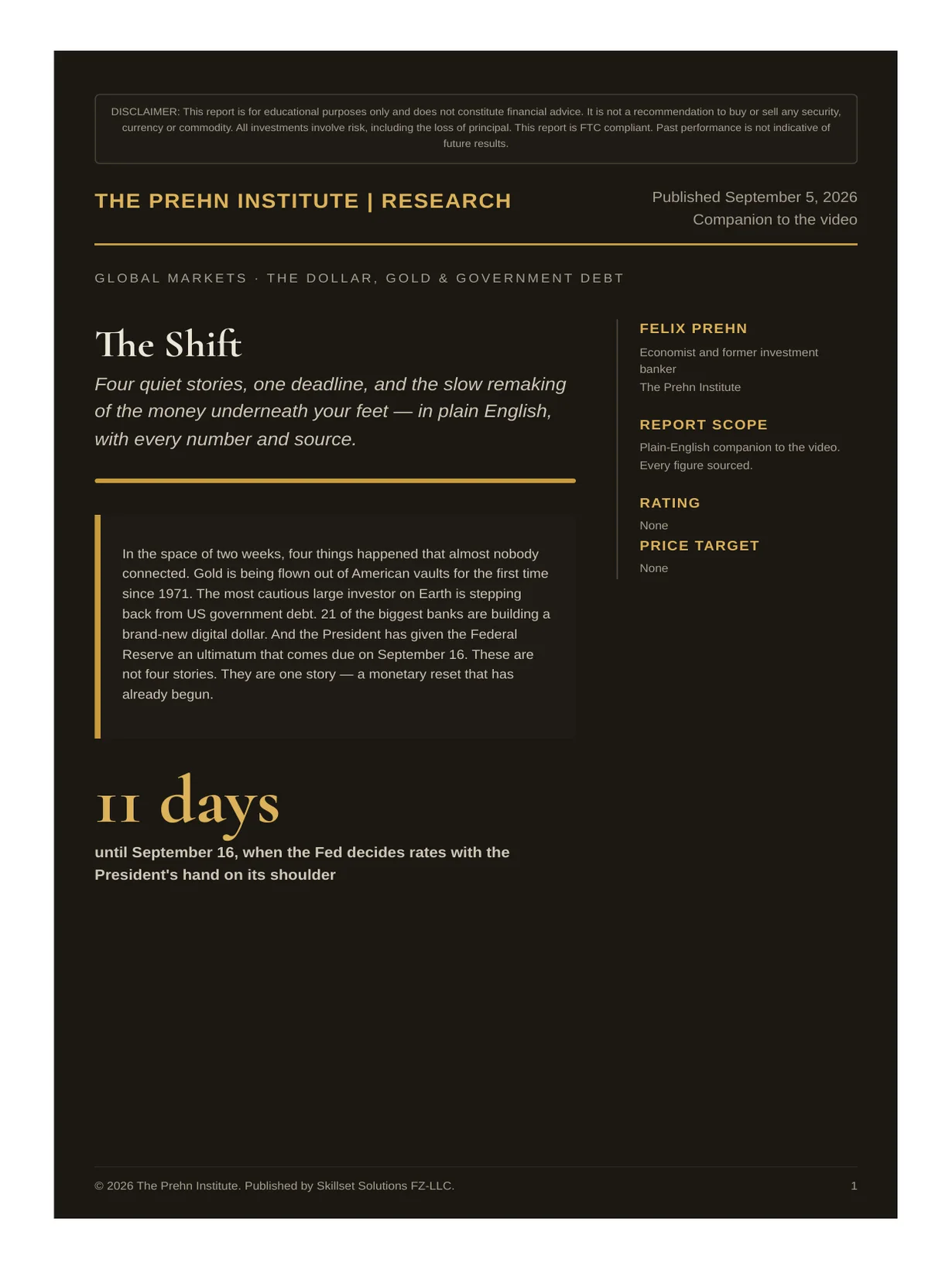
The Shift
Four quiet stories, one deadline, and the slow remaking of the money underneath your feet — in plain English, with every number and source.
Felix Nikolas Prehn · 5 September 2026 · 13 pages
Bottom line
In the space of two weeks, four things happened that almost nobody connected. Gold is being flown out of American vaults for the first time since 1971. The most cautious large investor on Earth is stepping back from US government debt. 21 of the biggest banks are building a brand-new digital dollar. And the President has given the Federal Reserve an ultimatum that comes due on September 16. These are not four stories. They are one story — a monetary reset that has already begun.
11 daysuntil September 16, when the Fed decides rates with the President's hand on its shoulder
Bottom Line
Four stories, one reset
Signal 1
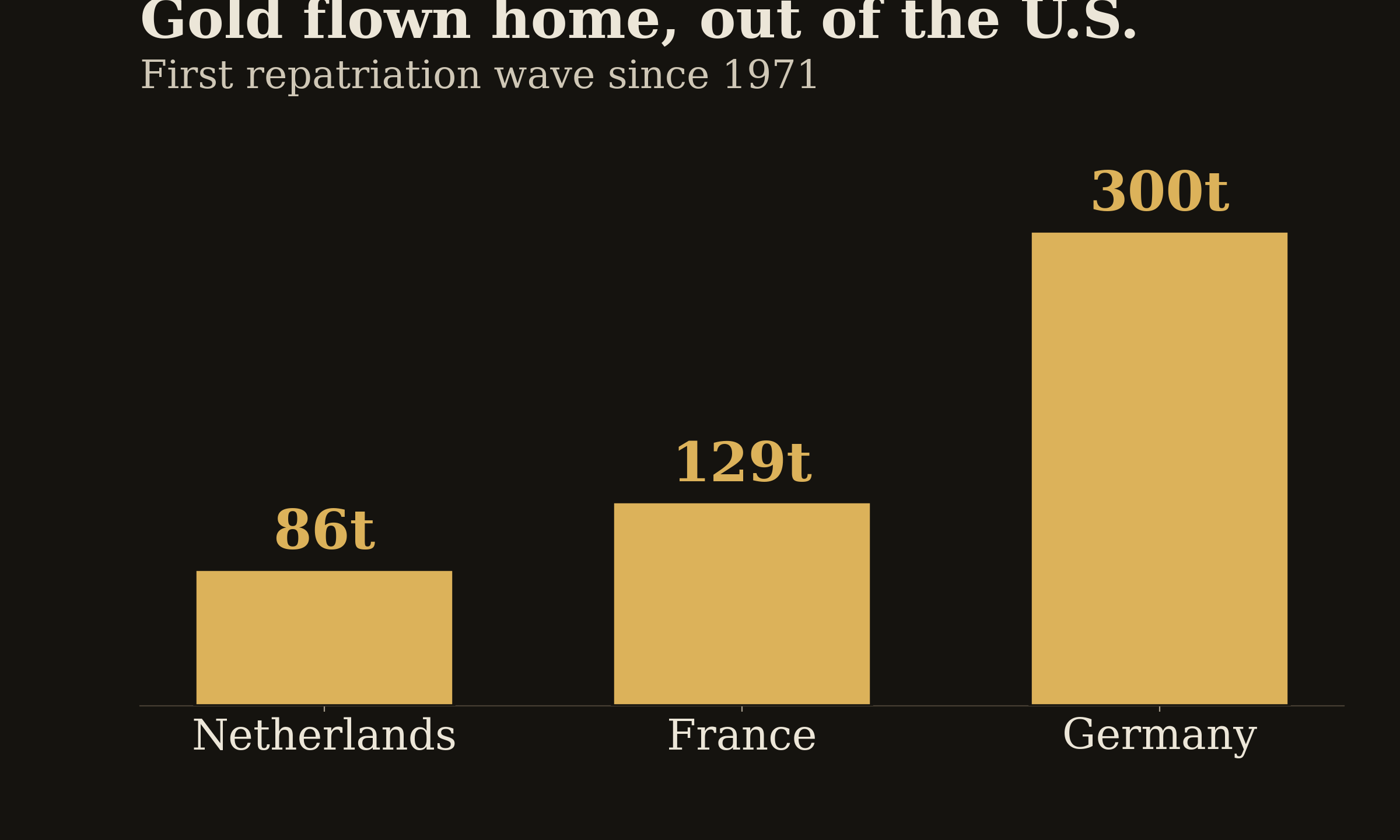
Gold is walking out of American vaults. The Netherlands, France and Germany have pulled physical gold home out of the United States — the first repatriation wave of its kind since 1971. That is a trust decision, not a technical one.
Signal 2
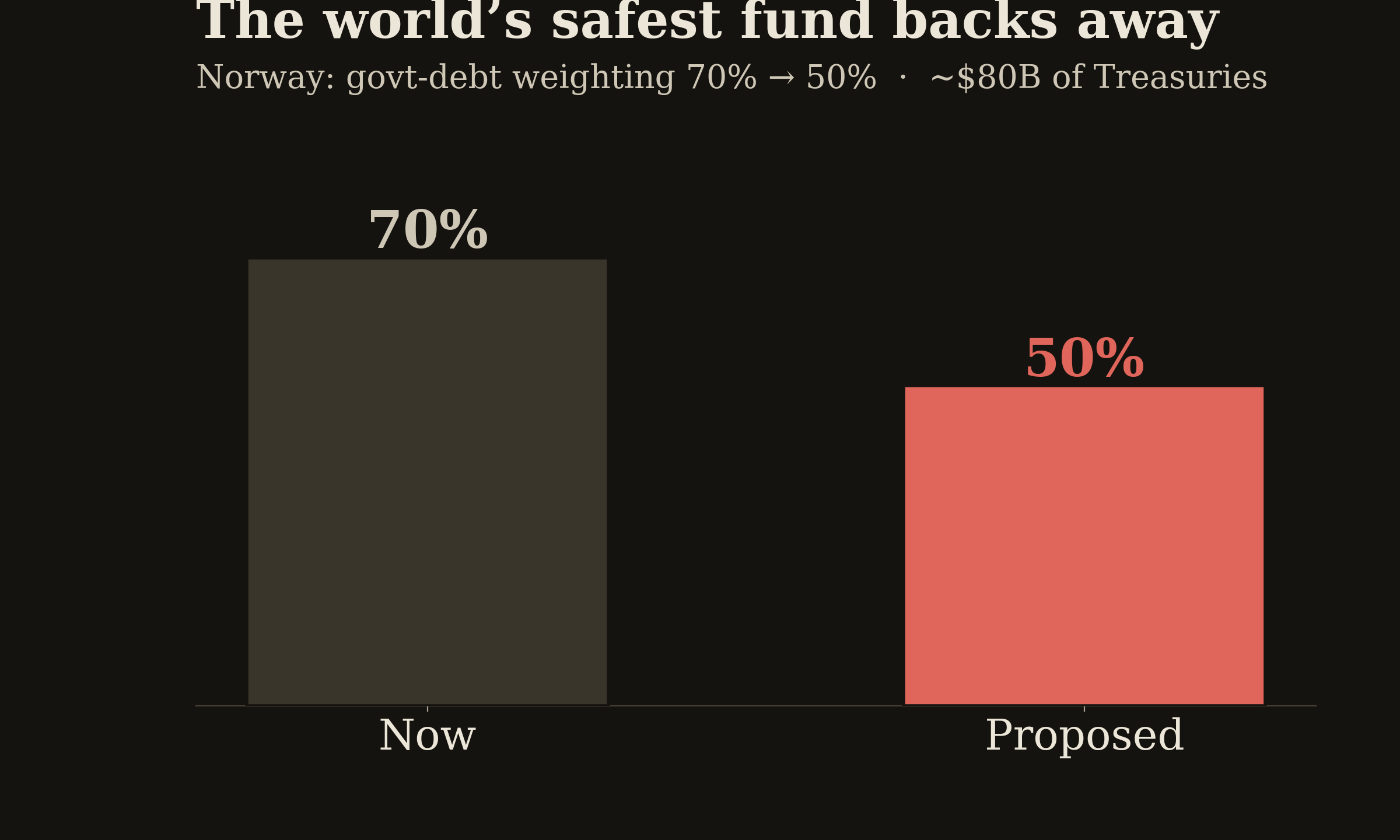
The safest money on Earth is dumping US debt. Norway's $2.3 trillion sovereign wealth fund — the most cautious large pool of money in existence — proposed cutting its government-debt weighting from 70% to 50%, roughly $80 billion of US Treasuries.
Signal 3
A new dollar is being built in plain sight. 21 of the largest banks — Goldman Sachs, Citi, Bank of America and others — are forming one company to launch a US dollar stablecoin, targeting the first half of 2027, under a brand-new law.
Signal 4
Japan was the first tremor, not the earthquake. The Japan wobble that wiped a trillion dollars off Wall Street in 40 minutes was the weakest seam cracking first — in a system under strain everywhere.
The keystone
September 16. The President has publicly told the Fed to cut rates — “or else.” When the printer answers to the politician, the world quietly buys gold, trims Treasuries and builds its own dollar. Which is exactly what we just watched happen.
September 16 & The Ultimatum
“Lower the rate” — or else
What was said
An ultimatum to the money printer. A few days ago the President gave the people who set your interest rates a public choice: lower rates, or he starts a trade war. He called high rates “a very unfair disadvantage” and told the Fed board to “be patriots.”
When it lands
September 16. That is the day the Federal Reserve meets to decide interest rates — with the President's hand on its shoulder. From today, that is 11 days away.
Why it isn't political
It's about trust, not party. Whether you love the President or can't stand him, put that away. The one feature that makes a dollar trustworthy is that the people who print it are separate from the people who spend it. When that wall is pushed on in public, the rest of the world notices.
The pattern
The last time this happened. The last time a President leaned on the money printer while the world pulled its gold out, the value of the dollar in your pocket got rebuilt from scratch. That is the playbook — and it is on the table again.
The Thing You Think Is Safe
You don't own 500 companies
The 40-year habit
“Safe” has meant one thing. For 40 years, when the world felt shaky, the answer was: put your money in an S&P 500 index fund and don't think about it. Diversified. America. It always comes back.
The 10-second maths
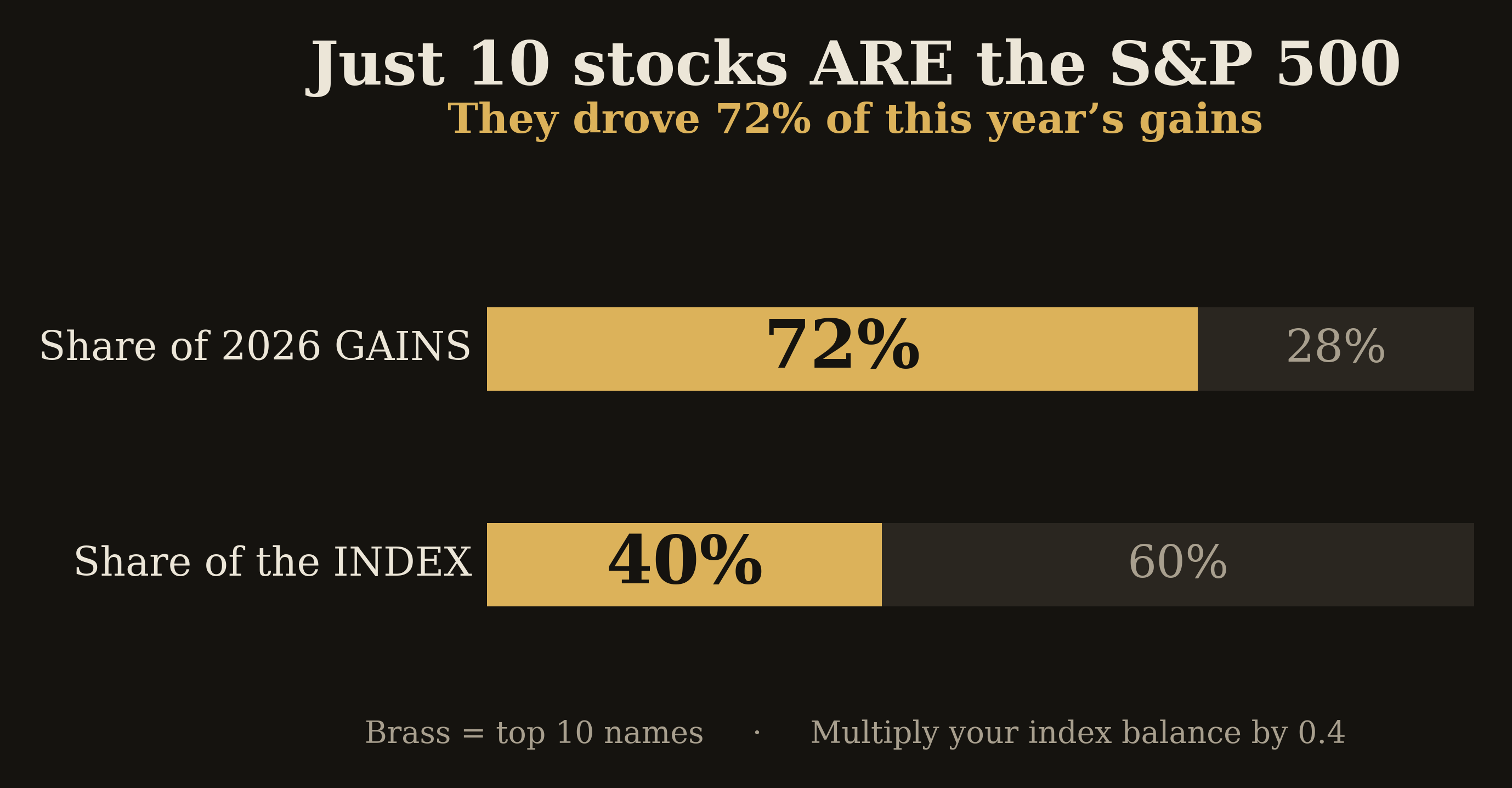
Multiply your index money by 0.4. That number is how much of your “diversified” retirement is really parked in just 10 names. Got $100,000 in the index? About $40,000 of it is in 10 stocks — and most people own those same 10 a second time, separately, without realising.
Why it's dangerous now
A concentration bet in a safety net's clothing. Those 10 are the most expensive, most crowded, most dollar-dependent names on the planet — right as the world backs away from dollar assets.
Don't take it from me
The careful bears and the biggest bull agree. A legendary value investor, asked about the S&P 500, answered in one word: “bearish.” Buffett's own company quietly sold its S&P 500 index fund. And Wall Street's most bullish voice now warns of a 20% drop.
The Gold Is Walking Out The Door
The lie detector of the system
The 80-year deal
Gold sat in America because it was safest. Gold has no earnings, no CEO, no tweets — it just holds its value while paper money slowly loses its. For 80 years a huge share of the world's gold sat in the vaults under the New York Fed. That was the deal.
The deal breaking
Home it goes. The Netherlands pulled 86 tonnes out and shipped it home. France finished pulling 129 tonnes out of the New York Fed. Germany moved roughly 300 tonnes home, with a growing chorus to bring the rest.
The only question
Why now? Strip away the jargon — “liquidity,” “crisis preparedness.” Why, after 80 years, pay the cost and risk to ship gold home? You only do that for one reason: you want it where you can put your hands on it, out of somebody else's control.
1971, again
History rhymes. In July 1971 the Netherlands asked to swap $250 million for gold. A young Paul Volcker was sent to beg them not to — “you are rocking the boat.” One month later, Nixon slammed the gold window shut forever. That was the last great monetary reset — and it started with one small country asking for its gold back.
They're Dumping America's Debt
The master switch behind your money
What a Treasury is
America's IOU. When the government spends more than it takes in, it borrows by selling IOUs called Treasuries. For decades the whole world lined up to buy them, because lending to America was the safest thing you could do with a dollar. That steady demand kept America's borrowing — and your loans — cheap.
What Norway did
The most boring money on Earth stepped back. Norway runs the biggest sovereign wealth fund on the planet — $2.3 trillion. It proposed cutting government debt from 70% to 50% of its bond benchmark: about $80 billion of US Treasuries it intends to stop holding.
A grown-up's warning
The reliable buyers are eroding. Economist Mohamed El-Erian looked at the same news and noted the list of historically reliable buyers of US debt whose role is fading keeps getting longer — Japan, the Gulf states, and now Norway.
Why you care
Fewer buyers, higher rates. If fewer people want to lend America money, America must offer a higher rate to tempt them — and when America's rate goes up, yours does too: your mortgage, your car payment, your taxes. This one number is the master switch.
A New Dollar — And Japan First
The replacement, built in plain sight
Signal 3: the new dollar
21 banks, one company. On September 1, 21 of the largest financial institutions — Goldman Sachs, Citi, Bank of America, UBS and 17 others — announced they're forming a single company to launch a US dollar stablecoin, targeting the first half of 2027.
What a stablecoin is
Just a digital dollar. Don't let the crypto word scare you. It's a dollar that lives on a computer network instead of a paper note — able to move worldwide instantly, no bank in the middle. A new law, the GENIUS Act, sets the rules.
Why it matters
Whoever builds the rails, controls the flow. Money on a network can be tracked, moved and managed in ways paper never could. The biggest banks and the government are building it — and you and I are not in the room. The least you can do is know it's being built.
Signal 4: Japan first
Chapter 1, not the book. Japan and the US had to prop up the yen, briefly cracking a giant hidden trade under Wall Street and wiping a trillion dollars off US stocks in 40 minutes. That wasn't a one-off — it was the weakest seam cracking first in a system under strain everywhere. (Full breakdown linked in the video description.)
Why This Reaches Your Bank Account
One machine, one bill — yours
- World trusts the dollar a little less
- Fewer buyers for America's debt
- America must pay a higher interest rate
- Your mortgage, car loan & taxes rise
The honest part
This is slow, not a crash. Nobody is saying the dollar disappears next week. The risk is quieter: the cash in your account slowly buys less, while the world gradually moves some savings out of dollars and into things that can't be printed.
What 1971 really felt like
A slow bleed, not one bad Tuesday. The 10 years after 1971 were the great inflation — prices roughly doubled, savings cut in half. That's what a monetary reset feels like from the kitchen table: a little every month, until it's already happened.
Why the news misses it
The loud story hides the real one. Everyone argues about the President on TV while the plumbing under the bank account is quietly re-piped. When you see the signals one at a time, each looks like a coincidence. Lined up, they're one machine.
You're already ahead
Showing up is most of it. Reading this puts you ahead of 99% of people, who will find out from a headline 6 months from now telling them what they should have done today. You're getting it today.
What A Normal Person Actually Does
Small, calm moves — before the headline
1. Don't over-hold cash
Keep an emergency fund, not a mountain. Hold 3 to 6 months of expenses you can grab in a hurry. Beyond that, cash is the thing quietly taxed by all of this — an ice cube in a warm room, leaking value a little every month.
2. Own things that hold up
Hard assets and great businesses. Real things that can't be printed — gold is the obvious one. And pieces of genuinely great businesses with pricing power: companies that can raise prices without losing customers, so they ride inflation instead of getting crushed by it.
The hard part is finding them
A tool, not a tip. In the Winston app you can filter to the highest-rated names — it scores every stock out of 100 on the fundamentals — narrow by sector or country, and see who's buying and selling on the inside. There's a free month linked below; if you like it, stay, if not, cancel.
3. Know what you own
Look before you need to. Pull up your 401k and really look: how much of your “diversified, safe” money is riding on those same 10 dollar-dependent giants? That one exercise changes people. Calm moves now beat panic later.
Turn Understanding Into A Plan
Five questions to ask before September 16
- Do I have 3 to 6 months of expenses set aside without having to sell investments?
- How much of my long-term savings is sitting in cash that quietly loses value every year?
- If I multiply my index-fund money by 0.4, how much is really riding on just 10 stocks?
- Do I own anything a government cannot print — like gold?
- If the market fell 20% or more, do I have a calm plan — or would I panic?
Disclaimer
This report is for educational and informational purposes only and does not constitute financial, investment, legal, tax or accounting advice. It is not a recommendation, solicitation or offer to buy or sell any security, currency, commodity or financial product. No buy/sell rating or price target is provided. All investments involve risk, including the possible loss of principal. Third-party figures and forecasts described here may be wrong and may not repeat. Historical comparisons are illustrative and simplify complex events. Readers should do their own research and consult appropriately qualified professionals before making financial decisions. Past performance is not indicative of future results. The Prehn Institute makes no guarantee regarding outcomes.