
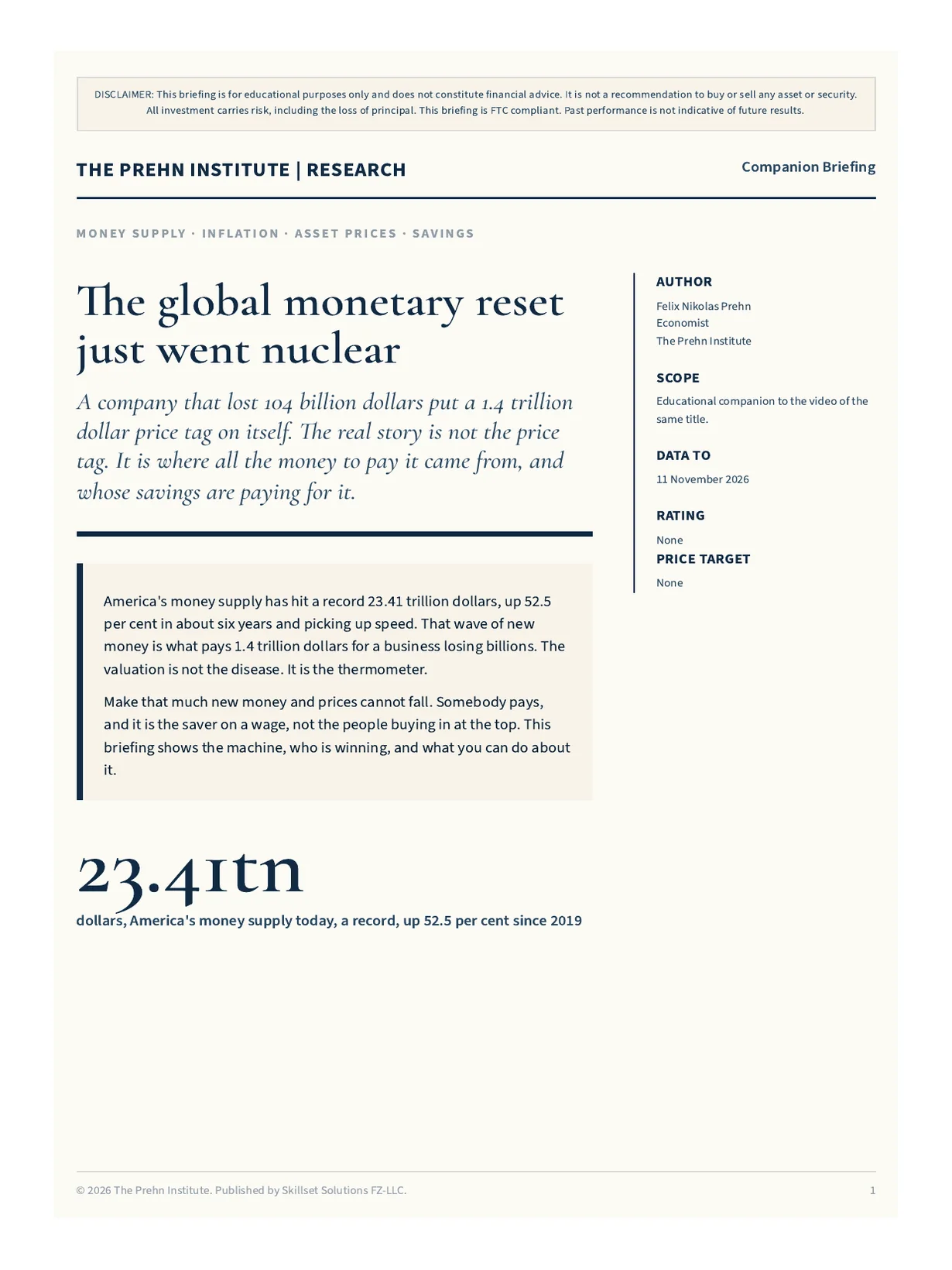
The global monetary reset just went nuclear
A company that lost 104 billion dollars put a 1.4 trillion dollar price tag on itself. The real story is not the price tag. It is where all the money to pay it came from, and whose savings are paying for it.
Felix Nikolas Prehn · 11 November 2026 · 13 pages
Bottom line
America's money supply has hit a record 23.41 trillion dollars, up 52.5 per cent in about six years and picking up speed. That wave of new money is what pays 1.4 trillion dollars for a business losing billions. The valuation is not the disease. It is the thermometer. Make that much new money and prices cannot fall. Somebody pays, and it is the saver on a wage, not the people buying in at the top. This briefing shows the machine, who is winning, and what you can do about it.
23.41tndollars, America's money supply today, a record, up 52.5 per cent since 2019
The Wrong Question
A company worth 1.4 trillion, on a loss
- 1.4tn
- dollars, the fully counted valuation at the top of the range
- 104bn
- dollars, the net loss on its own paperwork last year
- 26bn
- dollars put in by Google, the chip makers and others before the shares list
The filing came out this week. 825 million shares, priced somewhere between 70 and 78 dollars each. At the top of that range you reach 1.4 trillion dollars once you count everything in. For a business carrying a net loss of 104 billion. Most of that is an accounting line rather than cash walking out of the door, and the revenue is real and growing fast, getting on for 81 billion a year. But 1.4 trillion, on that.
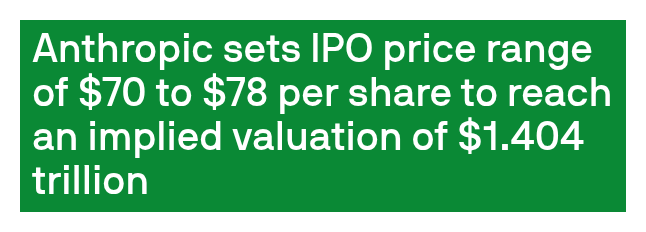
The best informed money is not staying away. Google and the chip makers and the rest have committed 26 billion between them in a private placement, before the shares even list. Two of them put in 10 billion each. These are not nervous people. They want in early.
So the comment sections fill up. Bubble. Top. Mania. I understand the instinct. But ask a completely different question. Where did the money to pay 1.4 trillion dollars for anything actually come from.
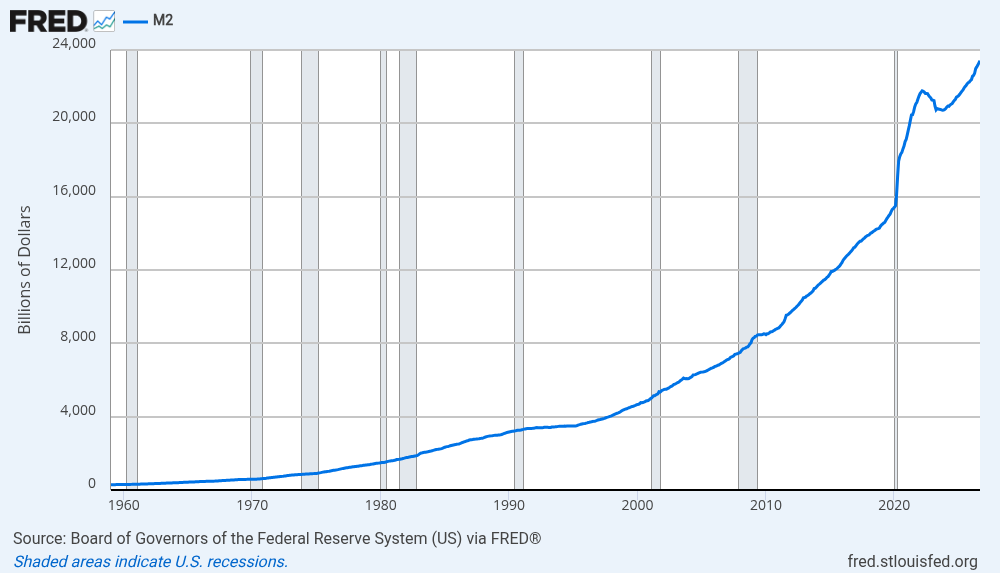
Here is the part that gets skipped. In 2019, before any of us had heard the word lockdown, America had about 15.35 trillion dollars moving around the system. Today the figure is 23.41 trillion, a record. That is 52.5 per cent more money in a little over six years. And the growth right now, year on year, 5.71 per cent, is the fastest since the middle of 2022. It is not cooling off. It is reheating.
The Same House, The Shrinking Money
The thermometer, not the disease
Hold those two facts next to each other. A tidal wave of new money on one side. A company worth 1.4 trillion that loses billions on the other. People treat them as separate stories. They are the same story.
When you create that much new money, it does not sit politely in a savings account earning nothing. It goes hunting. For shares. For property. For private companies most of us will never be allowed anywhere near. And the price of the thing goes up, not because the thing suddenly got better, but because every dollar chasing it got a little weaker.
This is where it gets uncomfortable, because the biggest money is not even listing on the stock market any more. The three or four largest private companies on the planet are now, between them, worth more than almost every tech company that came to the public market in the last 45 years, added together. A giant wealth engine, humming away behind a door most of us do not hold a key to.
We have run this exact experiment before, and recently. In 2020 and 2021 they expanded the money supply at a frightening pace. Every asset on earth went vertical. Shares, houses, crypto, used cars, the lot. Then, right behind it, the cost of the weekly shop went up and did not come back down. That was not bad luck. That was the mechanism in fast forward. We called it inflation and moved on.
So the 1.4 trillion is not the disease. It is the thermometer. It tells you, precisely, where the fresh money is pooling. Which changes the question. It stops being, is this overvalued. It becomes, whose money is being made worth less, so that this can happen at all. I am fairly sure the answer is you.
The Machine That Makes The Money
How 8 trillion arrives without a headline
Money is being made at a pace we basically never see outside a war. The obvious question is how. How do you bring 8 trillion fresh dollars into existence without it landing as one enormous headline that everyone argues about. You do it with plumbing. Dull, grey plumbing that nobody films.
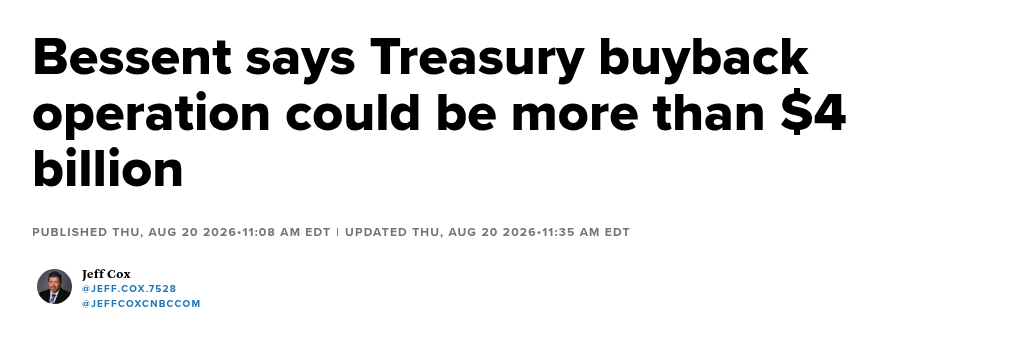
The move is this. Back in August, the Treasury doubled the size of its debt buybacks. From 2 billion dollars at a time, up to at least 4 billion at a time, on the longer dated government bonds. A buyback just means the government going into the market and buying back its own debt. But trace the cash. Where does the money to do that ultimately come from. The central bank makes it. Its balance sheet is up around 6.75 trillion dollars, to give you a sense of the scale.
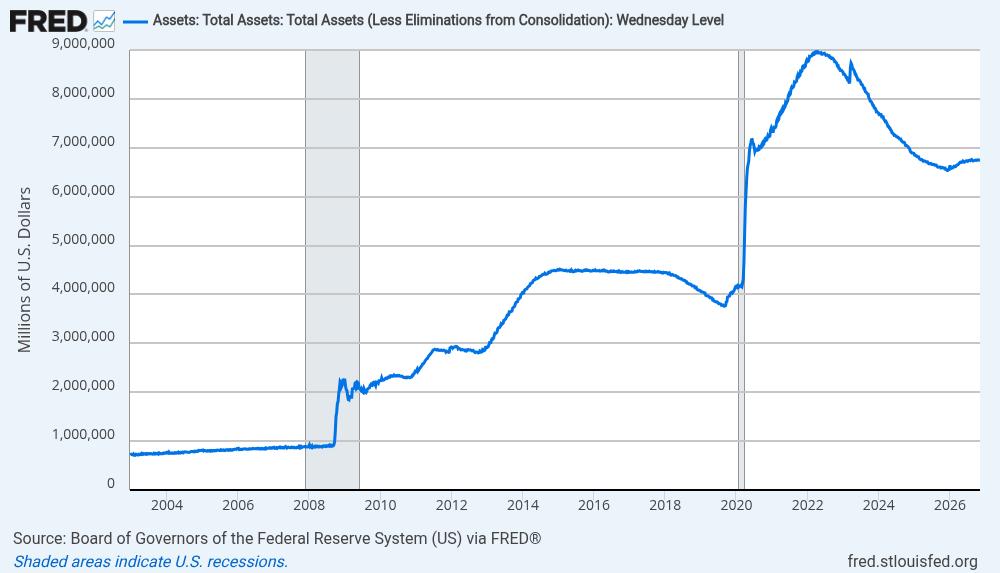
I once heard this explained better than I will ever manage. It is like me turning to you and saying, could you lend me a thousand pounds. You say, of course. Then you print the thousand pounds, fresh, in order to lend it to me. That is more or less the whole thing. The state lending to itself, with money that did not exist a moment before.
- Central bank makes the money
- It buys short dated debt; the Treasury buys back long dated debt
- Long term interest rates pressed down
- Every asset floats up; the saver pays the bill
The part they would rather you did not dwell on is why it matters to your life. When the Treasury hoovers up its own long term bonds, it pushes long term interest rates down. And long term rates are the price of nearly everything. They set your mortgage. They set what it costs a company to borrow and build. Force them down, and every asset in existence looks more attractive by comparison, so money floods in. Shares up. Houses up. That 1.4 trillion company, up. Most people only ever see the last light on the board flicker, the share price, and never the wiring behind it.
The 20 Year Experiment, And Who Pays
We have seen how this film ends
Please do not think any of this is theory. There is a country, a major one, that has run precisely this playbook for more than 20 years. It has been the single biggest buyer of its own government's debt that entire time. So we do not have to wonder how the film ends. We can simply look.
The ending is this, and I need you to sit with it. The person on a salary, the saver, the ordinary working family, got hollowed out. Slowly, politely, decade after decade, their standard of living ground gently downhill. Meanwhile anybody who owned a decent pile of assets did fine, better than fine. The same policy, two opposite outcomes, depending entirely on which side of it you happened to be standing. America is now, in broad daylight, copying the whole thing.
Before anyone writes in to say that country is different, it saves more, different culture, that misses the point. The mechanism does not care about culture. The mechanism is maths. When the people who make the money become the main buyers of the debt, the price of money stops telling the truth. It happened over there slowly, across 20 odd years, which is partly why nobody panicked. A loss you take at 1 or 2 per cent a year is a loss you can be talked out of noticing. You just feel, vaguely, that things used to be easier. That the salary went a bit further once. That your parents somehow bought a house without it being an absurd mountain to climb. You did not imagine it.
Bring it back to you. If you earn a wage, and you have some savings resting in a bank account, you are the one paying for every bit of this. You cannot feel it, because at no point does anyone reach in and lift a note out. That would cause riots. They do it the cleverer way. They leave your number exactly where it is, untouched, and they make the number mean less. Same digits on Monday as on Friday. But less bread behind each one. Less rent covered. Less petrol in the tank. Less life, per pound, per dollar, every year.
Follow The Money: The Crowded Boat
Everyone leaning on the same rail
Who is on the winning side of all this. And, more useful for you, what are they doing with their own money right now. Because what someone does with their own money tells you more than anything they will say into a microphone.
First the setup, so you see how exposed people already are. Ordinary households have never had more of their wealth tied up in the stock market than they do right now. More than the dot com peak. More than 2008. More, even, than 1929, the year everyone reaches for as shorthand for getting it catastrophically wrong. At the same time the market has gone narrow and top heavy. A handful of giant names now make up something like 30 per cent of the whole index.
- 30
- per cent of the whole index sits in a handful of giant names
- 1929
- the last time households were this far into the market, and beyond
- 1
- narrow door that everyone tries to leave through at the same moment
So when I say the public is all in on the same few shares, I am being close to literal. Nearly everyone is crowded onto one side of the boat, leaning on the same rail, admiring the same view. That is lovely, right up until it is not. When it turns, and these things always turn, who do you sell to. Everyone already owns it. Everyone wants out through the same narrow door at the same moment. That is not a gentle slope downhill. That is a stampede. The ones hurt worst are never the people stood near the exit. They are the ones who did exactly what they were told, bought the popular thing, and felt safe precisely because everybody else was doing it too.
What The Best Informed Are Doing
Toll booths in, crowded tech out
The more interesting signal is what the best informed people actually do with their own money when they think nobody important is watching. Look at the trades the very top of the US government had to disclose this year.
| Side | Names disclosed this year | The shape of it |
|---|---|---|
| Buying | Berkshire, Visa, Mastercard, Home Depot, Tractor Supply, Republic Services | dull toll booth businesses that take a tiny cut of everything, forever, and do well when prices rise |
| Selling or trimming | Meta, Netflix | the shiny, crowded tech that nearly everybody already owns |
Sit with the shape, because the shape is the message. They are buying the businesses that skim a little off every transaction, the cut that climbs as every price in the economy climbs. And they are selling the exciting stuff everybody already holds. Copying anyone's trades is not the point, and I would never tell you to do that. The point is the pattern. The Winston app keeps an insider panel on every stock, so you can watch who is really buying and selling a company with their own money, as opposed to what they say on the television.
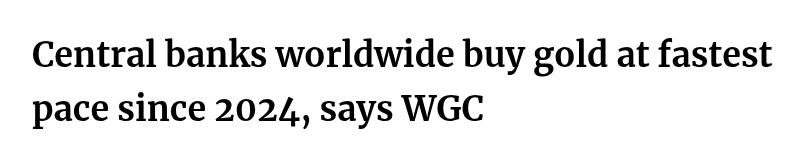
It is not only insiders. Watch the central banks. The very institutions that run the printers have been loading up on gold at the fastest pace in two years, hundreds of tonnes in a single quarter. Gold is now a bigger slice of their official reserves than US government bonds are, which has not been the case since the 1990s.
The 10 Per Cent Myth, And The Gates Confession
Which decade are you standing in
There is one more myth to pull apart, the big one, the one you have been fed your whole adult life. That shares hand you roughly 10 per cent a year, smooth and steady, like a law of physics. That 10 per cent is a marketing number, not a law of nature. The actual road is nothing like a gentle ramp. One year up 15, the next up less than 1, a year that limps sideways, a year that drops backwards, then a big one that makes up for it. Average it on a brochure and it looks lovely and smooth. Live through it, with your retirement riding on the timing, and it is anything but.
Picture two people. Same job, same savings, same sensible index fund, the boring one everybody recommends. One starts in a year when the printing is roaring and shares are still cheap against all that new money. The other starts right at the top, as the whole thing runs out of puff. 30 years on, one retires comfortable and the other is still working, and on paper they did precisely the same thing. The only real difference was the timing they were handed. Which of the two you turn out to be depends enormously on what the money supply is doing the moment you set off. That is the entire reason I will not stop talking about it.
And then I watched the Bill Gates interview, and it put a cold feeling through all of this. He is on CBS. The interviewer asks, more or less, whether something terrible has to happen before the world takes these risks seriously.

Suffer a few of the negatives. This, from one of the largest asset owners on the planet. Somebody who, whatever these negatives turn out to be, is about as thoroughly insulated from them as a human being can arrange to be. Lay that sentence on top of everything else. The printing. The buybacks. The decades long hollowing out of the saver. Heard against all of that, it does not sound like a warning any more. It sounds a great deal more like a confession.
Seven Cents On The Dollar
The one number to hold
The whole thread, pulled tight. They are making money faster than at almost any point in modern history. That new money lifts assets, which is wonderful if you own a great pile of them and genuinely brutal if what you mostly hold is cash and a monthly salary. The people running the machine understand it completely, and you can tell, because of where they are moving their own money. One of the richest men alive has gone on camera and calmly said the rest of us may simply have to take the pain.
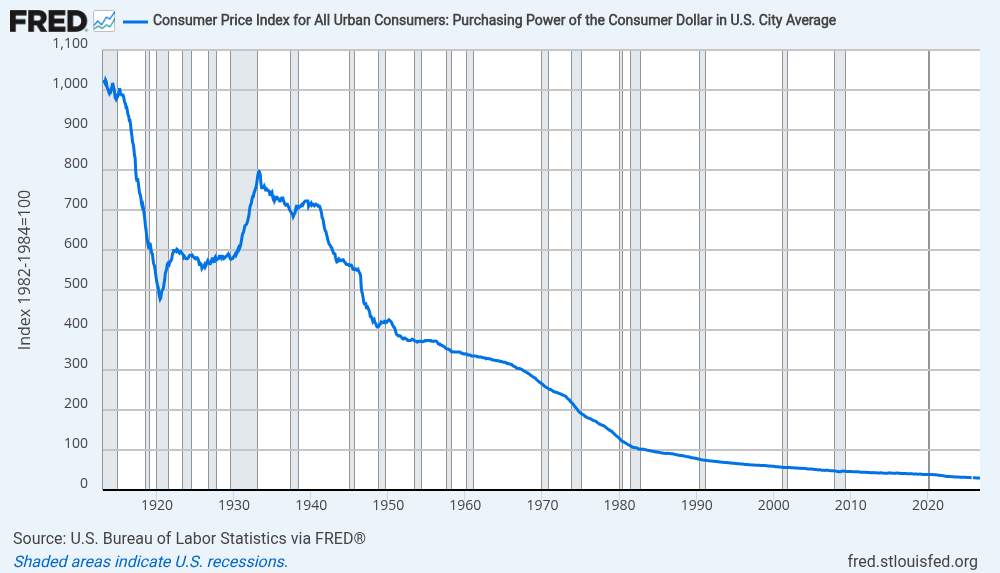
I will leave you with one number. In 1971, a dollar was a dollar. By the US government's own figures, their own, that same dollar today buys you about 7 cents of what it bought back then. 7 cents. And frankly I do not even believe their figure. I think the honest number is a fair bit worse.
Here is what makes me angry about it. In 12 months, in 24, in 36, a great many good people are going to wake up and wonder where their savings went. Where the retirement they were promised went. Why a salary that felt comfortable somehow does not stretch to the end of the month any more. They will not have been reckless, or lazy, or stupid. They will simply never have been taught the one thing that would have let them protect themselves. Punished, in the end, for not knowing something nobody ever offered to teach them. That is so deeply unfair that putting even a small dent in it is one of the things that gets me out of bed in the morning.
Disclaimer
This briefing is for educational purposes only and does not constitute financial advice. It is not a recommendation to buy or sell any asset or security, including gold, shares or any company named here. All investment carries risk, including the loss of principal. Past performance is not indicative of future results. The one country referenced is deliberately not named, as the point is the mechanism rather than any single nation. The Prehn Institute takes no sponsorships or endorsements.