
The Unthinkable Plan to Reset the Dollar
Higher mortgage rates, a Fed that may be feeding the problem, a new way of measuring inflation, and $57 billion slipped back into the banks
Felix Nikolas Prehn · 27 September 2026 · 18 pages
Bottom line
America's official inflation gauge is being recalculated so it reads lower, while the Treasury quietly pumps money back into the banking system and the Fed talks tough. Put together, that is a path to shrinking a record government debt against a dollar that buys less every year. The people most exposed are savers who trust the official number.
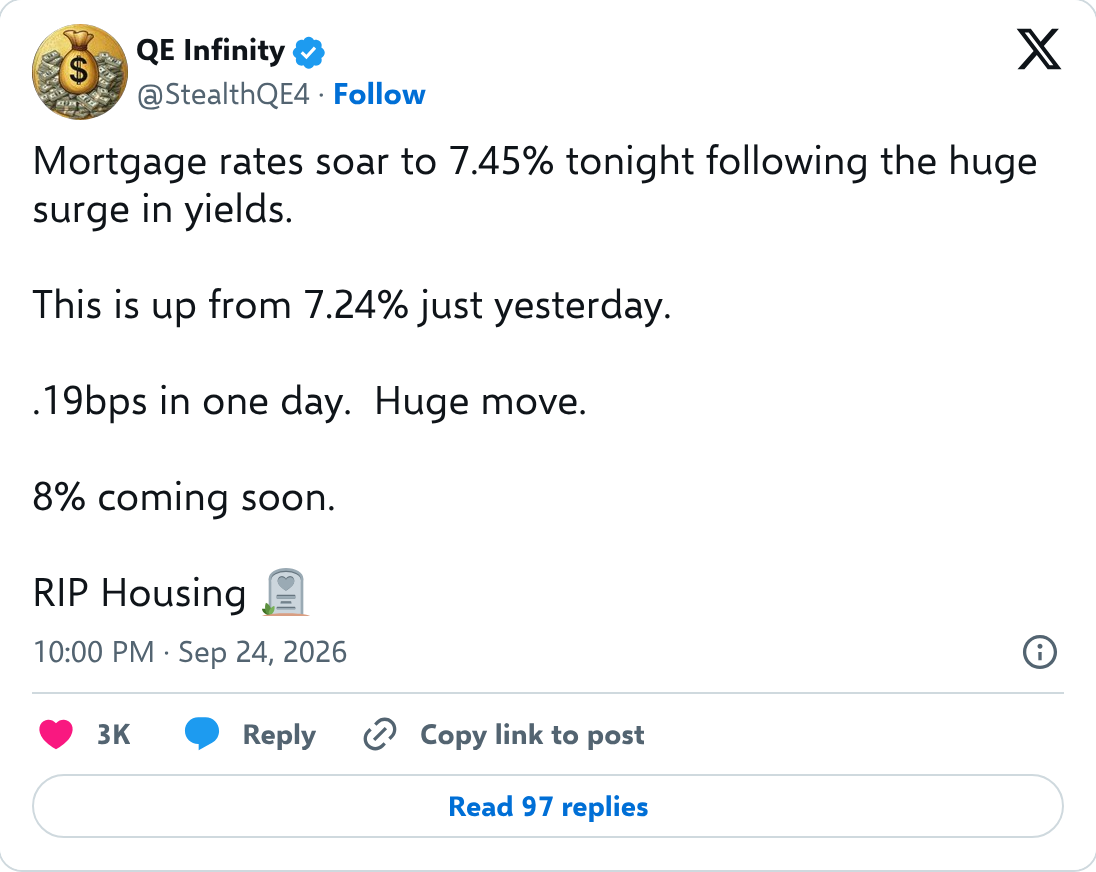
7.45%30-year mortgage rate, up from 7.24% in 1 night
Bottom Line
One plan, 4 moving parts
Bottom line. Nobody would announce it this way, but the pieces are public. A government with record debt cannot afford high rates for long. The Fed has just raised anyway. The gauge the Fed steers by is being recalculated to read lower. And the Treasury is using its own account to push money back into the banks.
- Let prices run a little hot
- Report them a little lower
- Use the lower reading to bring rates down
- Debt shrinks against a weaker dollar
The pressure
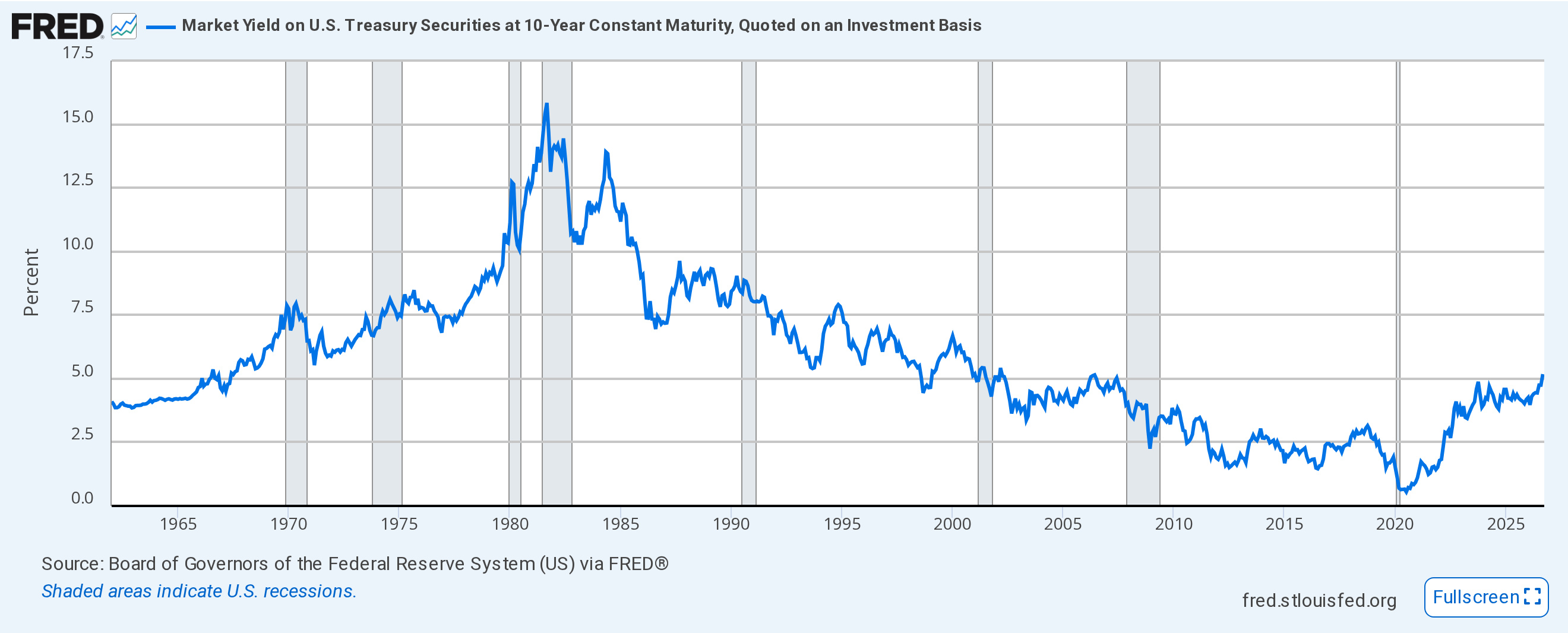
Rates are climbing at both ends. The 10-year government bond yield hit 5.23%, the highest since 2007, and the Fed raised its own rate for the first time since 2023. Mortgages jumped to 7.45% in 1 night.
The ruler
The inflation gauge is changing. Tom Lee estimates the new method for core PCE could take close to half a percentage point off the reading, without any price in a shop falling.
The plumbing
The Treasury is acting like a second central bank. It pulled about $100 billion out of the system in 1 week, then injected $57 billion the next by running down its account at the Fed.
The signal
Central banks are buying gold. Gold is more than 20% below its January record, yet central banks bought 289 tonnes in the second quarter, a record for that quarter.
It Moved Before Washington Did
7.24% to 7.45% in 1 night
Who sets mortgage rates
Not the Fed, directly. A 30-year fixed mortgage in America follows the 10-year government bond. When investors demand more to lend to the government, banks demand more to lend to you.
Who feels it first
Anyone who resets. There are more adjustable-rate mortgages outstanding now than in 2008. Variable-rate borrowers, anyone remortgaging next year and anyone selling to a buyer who can now borrow less all feel it.
A Unanimous Rise
The first rate rise since 2023
- 3.75–4%
- Fed rate after a quarter-point rise, every member voting for it
- 16 of 18
- officials pencilling in at least 1 more rise (4 see 2)
- ~70%
- market odds of another rise at the next meeting (~95% by year-end)
Bottom line. The new chair, Kevin Warsh, said inflation had been too high for too long. The Fed's own projections and the market both expect more rises. That makes borrowing dearer for households, businesses and the government itself.
| Who | How the rise reaches them | What it costs |
|---|---|---|
| Variable-rate borrower | Payment resets upward | Higher monthly bill |
| Remortgaging next year | New deal priced off higher bond yields | Higher fixed rate for years |
| Home seller | Buyer can borrow less | Lower offers, slower sale |
| US government | Interest on its debt rises | Bigger deficits |
The Medicine That Feeds the Disease
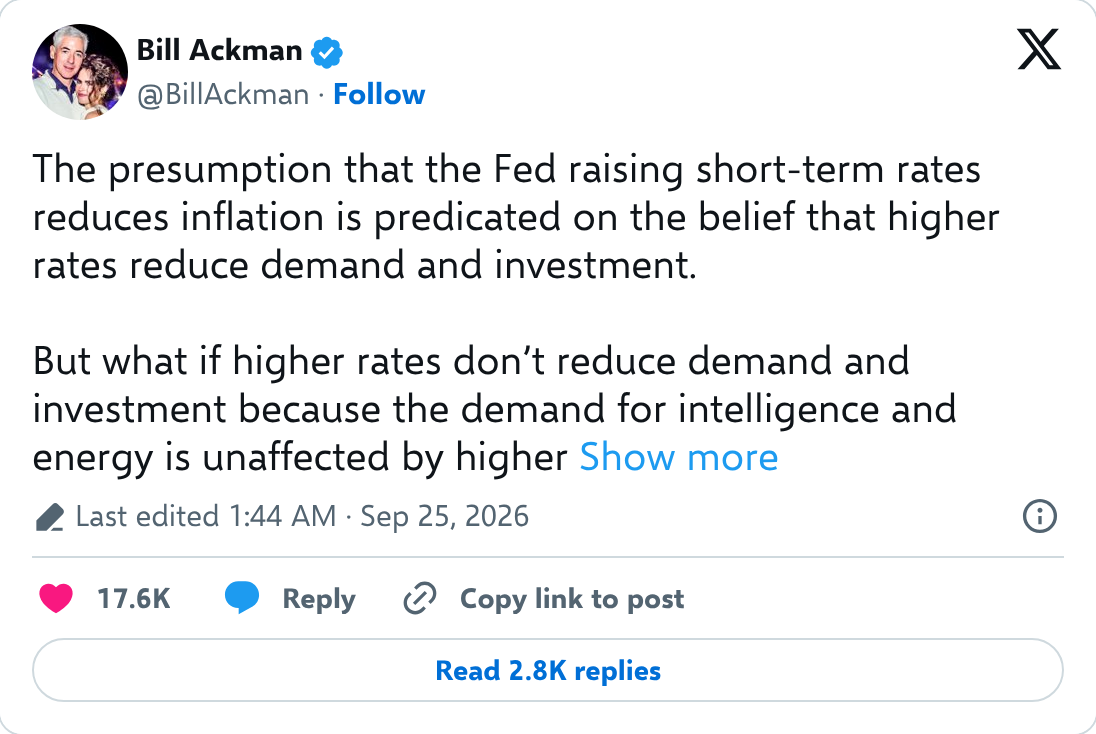
“I think the Fed might have just made a mistake”
Demand that ignores rates
The AI race has “a near infinite ROI”. If the prize looks that big, a quarter-point rise does not stop companies buying chips and power stations. Companies are expected to sell between $300 billion and $570 billion of new debt this year just to fund AI.
Interest is a cost
It is “embedded in everything”. The lorry, the warehouse, the supermarket's stock and the builder's bricks are all financed. When money gets dearer, those costs rise and are passed on at the till.
- Fed raises rates to fight prices
- Business costs rise
- Prices rise
- Fed raises again
A Shortage Is Not a Demand Problem
The Fed is standing in a corridor with 2 doors
Too little supply
Ben Bortner's reply. Much of America's inflation is a shortage of houses, computing power and healthcare. Higher rates make that worse, because the builder cannot afford to build and the power company cannot afford to expand.
The government's side
Brian Armstrong's reply. Higher rates raise the interest the government pays on its own debt. That means bigger deficits, and bigger deficits are eventually covered by creating money.
Why this time differs
Rate rises cooled the post-pandemic surge. That was too much money chasing too few goods. This episode looks more like shortages, and you do not fix a shortage by making it dearer to build the thing that is short.
| Door | What happens | Who loses |
|---|---|---|
| 1. Keep raising | If Ackman is right, the loop feeds itself | Borrowers, and savers facing higher prices |
| 2. Stop raising | Inflation runs hotter than admitted | Cash, fixed incomes, savings earning less than prices rise |
- 2029
- when the Fed expects inflation back at its 2% target
- 4.6%
- inflation consumers already expect
- $103+
- oil, per barrel
The Fed's Favourite Gauge
A lower number, with no lower prices
Bottom line. Core PCE, which strips out food and fuel, is the inflation number the Fed actually steers by. Its method is changing. Tom Lee estimates the change alone could knock close to half a percentage point off the reading.
- ~0.5
- percentage point off core PCE from the new method (Tom Lee)
- 0
- prices in shops that have to fall for it to happen
- Weeks
- between the rate rise and the gauge being adjusted
In fairness
Methods do change for good reasons. Spending habits shift and new products arrive. Nobody is suggesting a law is being broken.
The question to ask
Who benefits from a lower number now? The answer is the borrower carrying the biggest debt pile in its history: the US government.
140 Years of Stable Prices, Then Not
$1 in 1940 is more than $22 today
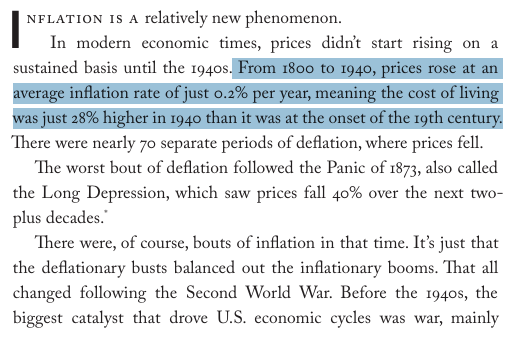
- 0.2%
- a year, 1800 to 1940 (28% in total over 140 years)
- 3.7%
- a year since 1940 (over 2,200% in total)
- $22+
- what something costing $1 in 1940 costs now
Why it matters
It sounds like a rounding error. It is the difference between a world where savers are rewarded and one where they are slowly, politely robbed.
The debt connection
No default, no tax rise. Let prices run a little ahead of the interest paid, and every year the debt is worth less in real terms. It is a quiet transfer from savers to borrowers.
The Unthinkable Plan, Assembled
A gap between the official number and your bills
- A government with record debt cannot afford high rates for long
- The Fed has raised and may raise again, making the interest bill worse
- The Fed's gauge is recalibrated to read lower
- The lower reading justifies bringing rates back down
Bottom line. The reset won't arrive as a big bang or a new currency on a Monday morning. It shows up as a gap between the official number and your actual bills. Every month the gap stays open, money moves from people who save in dollars to people who owe in dollars.
| Most exposed | Why |
|---|---|
| Retiree on an indexed pension | It rises with the official figure, not the real one |
| Family sitting in cash | Cash earning less than real inflation loses buying power |
| Fixed-income saver | Income is fixed; bills are not |
The Money Moving Under the Floor
$57 billion injected in 1 week
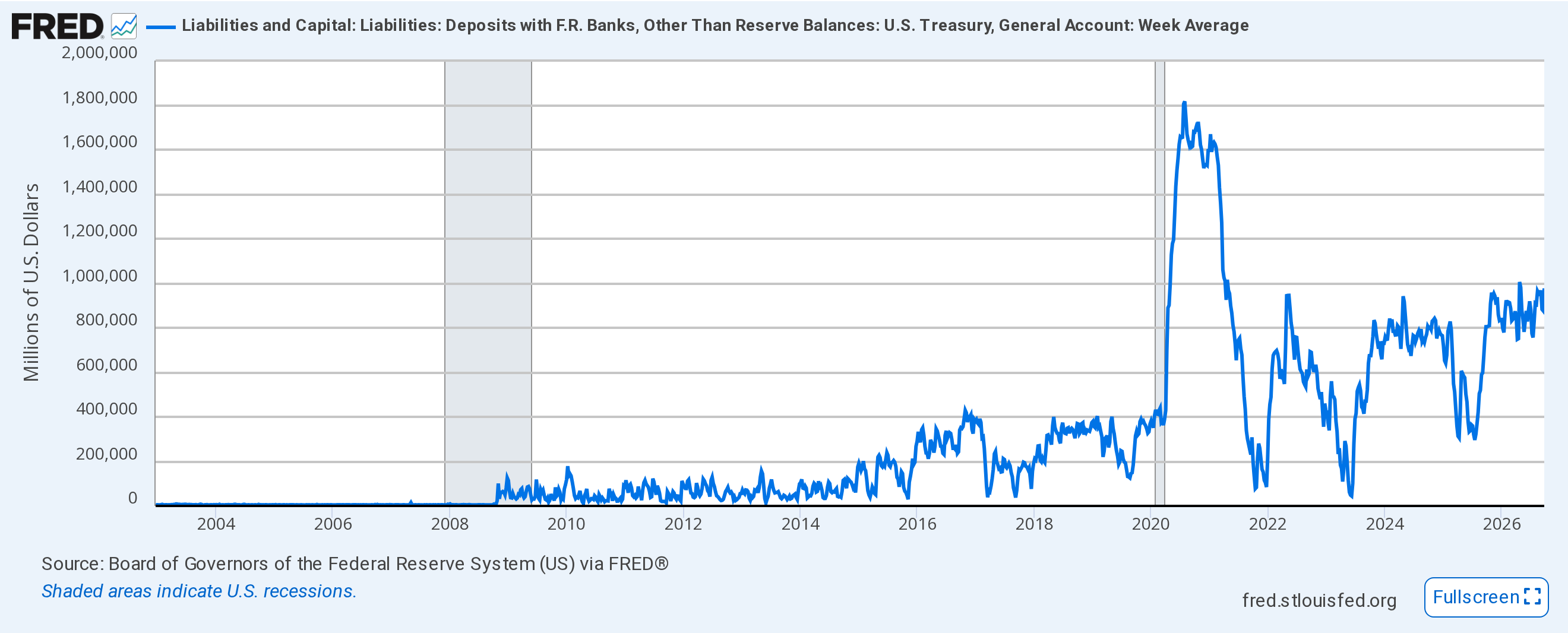
- +$100B
- TGA swelled in 1 week, to over $1 trillion at the peak
- −$84B
- bank reserves over the same week
- $57B
- pushed back into the system last week via the TGA
Say the Tough Thing, Do the Soft Thing
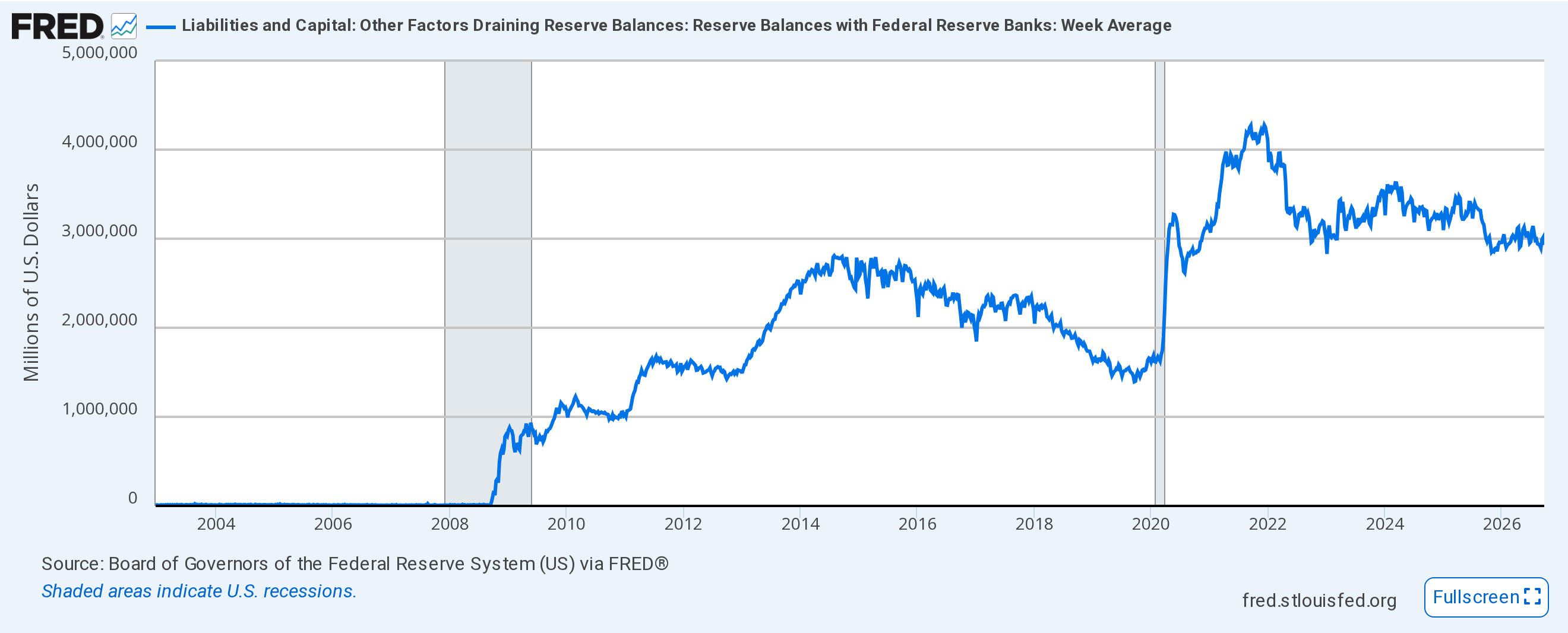
Drain, inject, drain again
An idea, not a decision
Treasury cash into the overnight market. At the New York Fed's conference on the Treasury market, officials discussed Treasury lending its spare cash straight into the overnight lending market banks use every night. Nothing has been announced.
Why you'd want it
The Fed looks strict; the pipes keep flowing. The Fed cannot pump money in right after raising rates. The Treasury can, through an account most people have never heard of.
What comes next
Back above $1 trillion within weeks. The Treasury's own plans have the account refilling, which means draining money out again. Each drain tightens things for banks and pushes yields up. Each injection is money that finds its way into prices.
- Drain: yields rise, mortgages jump
- Inject: money flows into prices
- Refill above $1T: drain again
Gold, While Everyone Looks Away
The public sells, central banks buy
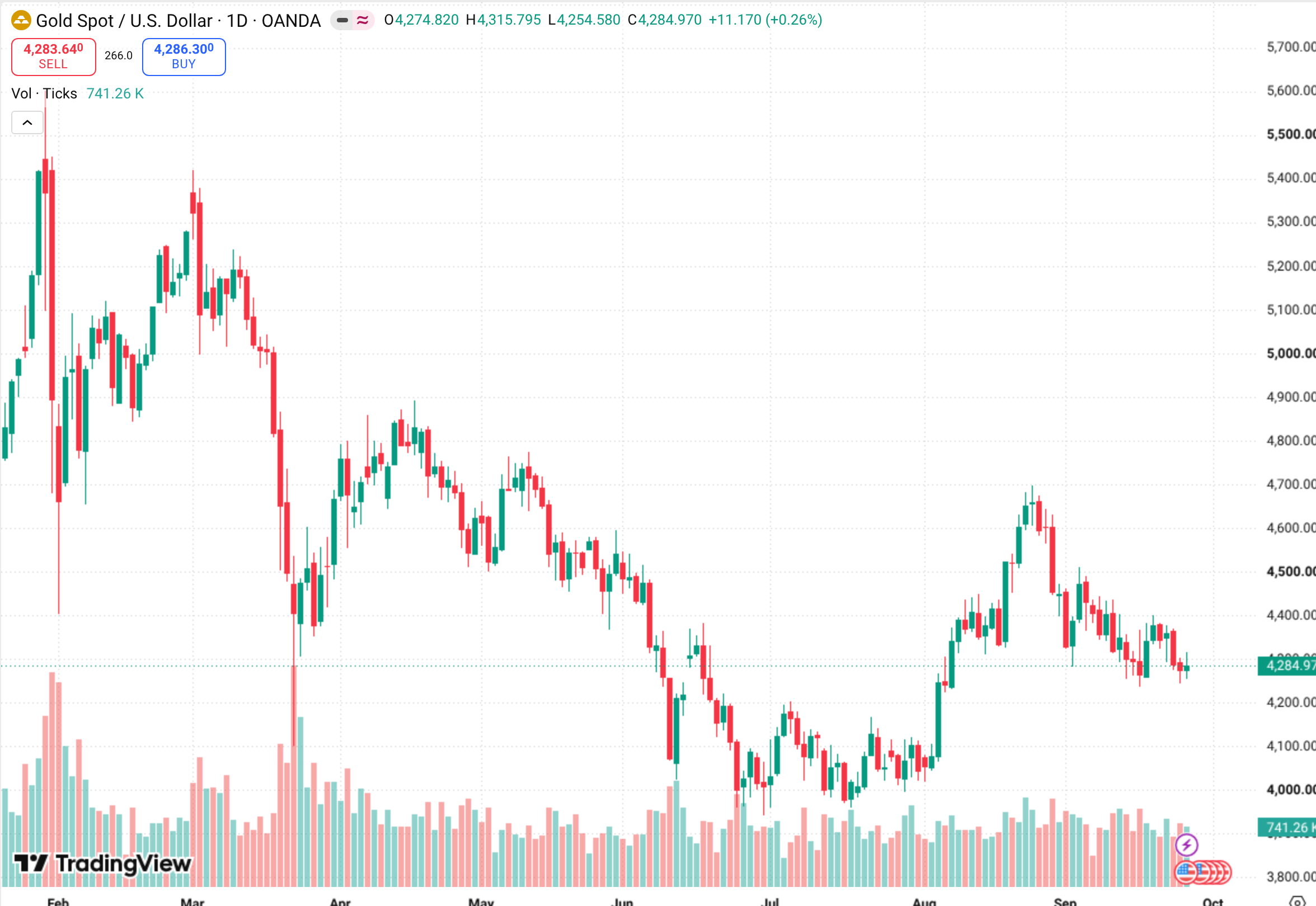
- ~$4,290
- gold per ounce now
- 20%+
- below January's record of about $5,500
- 289t
- central-bank buying in Q2, up 62% on a year earlier, a Q2 record (World Gold Council)
Direction, Not a Target
What sits under the gold price
| Force | What it does |
|---|---|
| Central-bank buying | Record Q2 demand from the institutions that print money |
| India's festival and wedding season | Seasonal household buying that ignores the Fed |
| Options positioning | Goldman Sachs notes options have amplified moves both ways |
| $4,000 | The level many traders watch as a floor |
| Rising rate bets and a firmer dollar | The reason for the recent slide |
Bottom line. If a government that can't afford its interest bill needs rates back down, and a new ruler gives it cover, the asset hurt most by rising rates is often the one helped most when they turn. Not overnight and not in a straight line. This report gives no target, because nobody knows.
Winston Inflation Shield
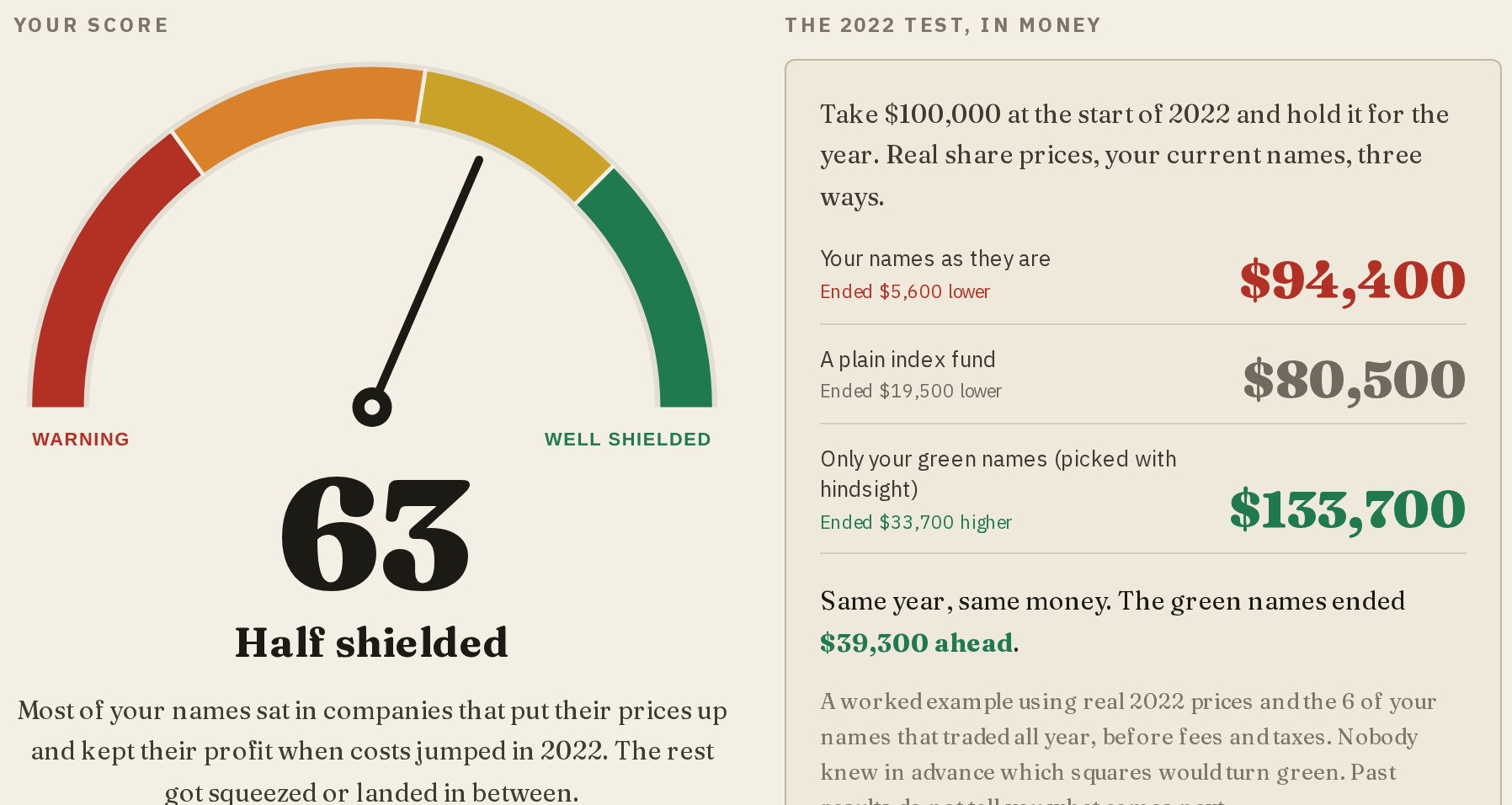
Would your holdings have passed 2022?
The test
2022 is the last real inflation test. Prices ran hot, rates went up fast and the S&P 500 fell about 19%. Winston runs the names you own through that year.
What it shows
Who kept their margins. Name by name, it shows which holdings held their profit margins as costs rose and which were squeezed, with a dial from warning to well shielded.
Winston Inflation Shield sits on the Risk exposure page beside the AI bubble test: winstondaily.com/survive-the-bubble?tab=inflation
Turn Understanding Into Process
5 questions before the next inflation reading
- Is my mortgage variable, or does my fixed deal end within 2 years?
- How much cash am I holding, and is it earning more than the inflation I actually pay?
- Does my pension or income rise with the official figure or with my real bills?
- Can the businesses I own pass rising costs on, or do they eat them?
- Am I still running my money on a rulebook written for 40 years of falling rates?
Disclaimer
This report is for educational and informational purposes only and does not constitute financial, investment, legal, tax or accounting advice. It is not a recommendation, solicitation or offer to buy or sell any security, currency, commodity or financial product. No buy/sell rating or price target is provided. All investments involve risk, including the possible loss of principal. Market events, policy discussions and historical comparisons described here may not repeat, and policy ideas that have been discussed may never be implemented. Illustrations simplify complex systems and may omit factors. Readers should conduct their own research and consult appropriately qualified professionals before making financial decisions. Past performance is not indicative of future results. The Prehn Institute and Winston make no guarantee regarding outcomes.