
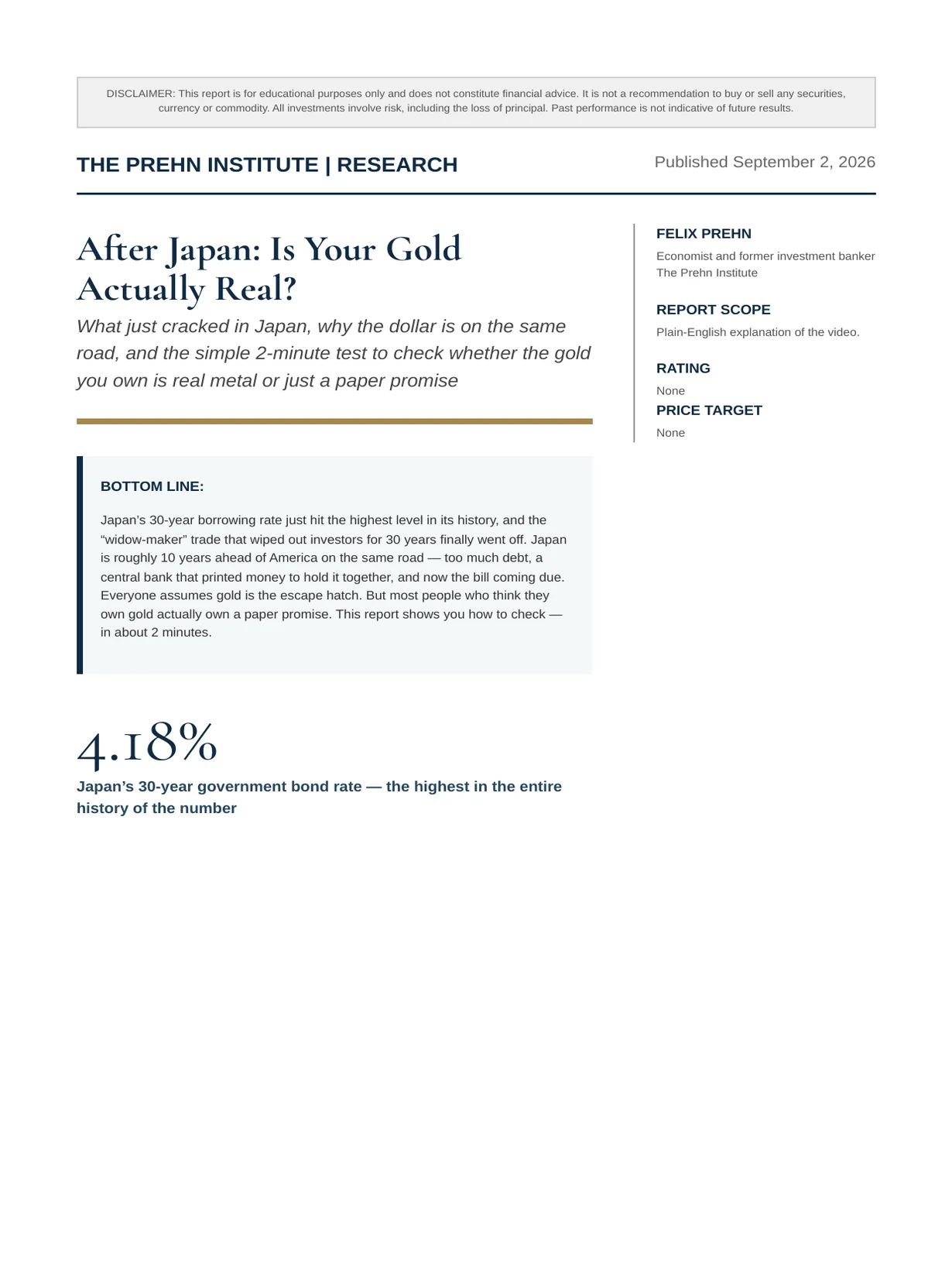
After Japan: Is Your Gold Actually Real?
What just cracked in Japan, why the dollar is on the same road, and the simple 2-minute test to check whether the gold you own is real metal or just a paper promise
Felix Nikolas Prehn · 2 September 2026 · 16 pages
Bottom line
Japan’s 30-year borrowing rate just hit the highest level in its history, and the “widow-maker” trade that wiped out investors for 30 years finally went off. Japan is roughly 10 years ahead of America on the same road — too much debt, a central bank that printed money to hold it together, and now the bill coming due. Everyone assumes gold is the escape hatch. But most people who think they own gold actually own a paper promise. This report shows you how to check — in about 2 minutes.
4.18%Japan’s 30-year government bond rate — the highest in the entire history of the number
Bottom Line
One crack, three lessons
LESSON 1
Japan just cracked. Japan’s 30-year borrowing rate broke out to the highest level in history, and its stock market lost more than $200 billion in a single day. The “widow-maker” — the trade betting Japan’s debt would finally blow up — woke up after 30 years.
LESSON 2
The dollar is on the same road. Japan is about 10 years ahead of America on the exact same path: too much debt, a central bank that printed money to hold it together, and now rising interest costs. What cracked in Tokyo is a dress rehearsal for Washington.
LESSON 3
Gold isn’t ready — and neither is most people’s gold. The lifeboat everyone counts on has two holes in it: there is far more paper “gold” than real metal, and most people who think they own gold actually own a paper promise.
THE GOOD NEWS
This one is fixable in 2 minutes. You can check whether your gold is real, allocated, physical metal — or just an IOU — by reading three lines in the fund’s own documents. The test is on page 9.
Key idea.
A bond rate in Tokyo and the value of the dollar in your wallet are not 2 separate stories. They are 1 story about what happens when a country owes more than it can ever repay — and the people who move billions are treating it that way.
What Just Broke in Japan
The widow-maker finally woke up
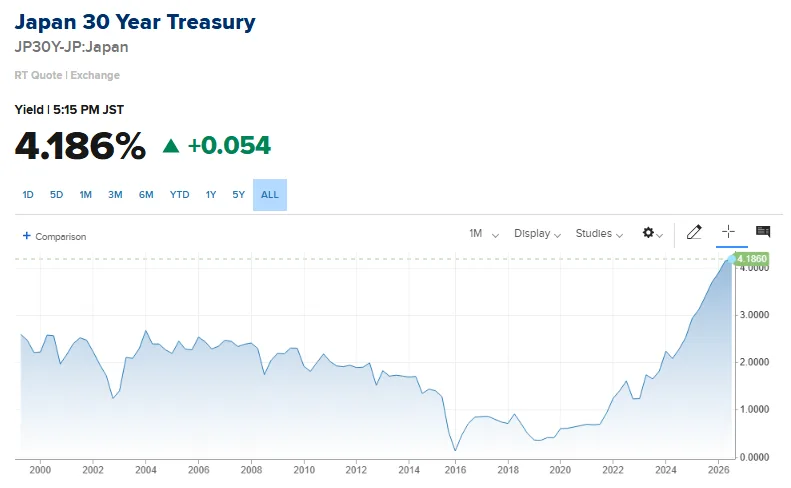
Japan’s 30-year government bond rate at its highest level on record. Source: Barchart, September 1, 2026. (See Sources for corroboration notes.)
WHAT A BOND IS
An IOU with a rate on it. A government bond is just the IOU a government hands out when it borrows money. Japan’s 30-year IOU now pays 4.18% — the most it ever has. Not the most this decade. The most in the entire history of the number.
THE WIDOW-MAKER
A 30-year losing trade. For 30 years, investors bet Japan’s borrowing costs would finally blow up — and kept losing, so reliably the trade was nicknamed the “widow-maker.” This week it finally paid off.
WHY IT HELD SO LONG
The central bank became the buyer. The Bank of Japan created money out of thin air and bought the debt itself — at the peak, more than half of all Japanese government debt. That held rates down. The price was the currency: the yen has bled value for years.
THE CANARY
Japan owes about 200% of its economy. That’s the worst in the developed world — roughly twice what the whole country produces in a year (the US is around 120%). Japan shows every indebted country how this plays out: debt piles up, interest becomes unpayable, the central bank prints, and the currency pays.
Why the Dollar Is on the Same Road
$40 trillion, and the interest is
exploding
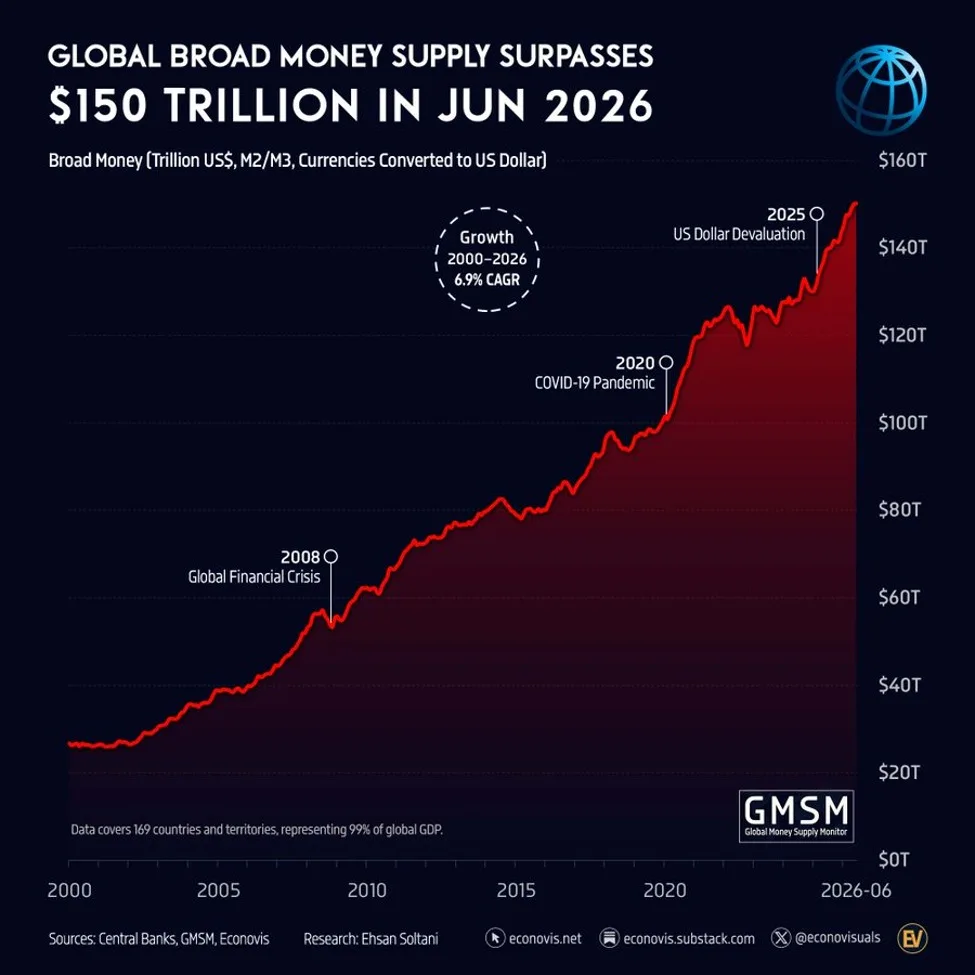
The world’s money supply at a record $150 trillion — up about $50 trillion since 2020. Source: The Kobeissi Letter, September 1, 2026.
The whole world repriced at once. Global bond rates just hit their highest since 2008. The US 30-year touched 5.3%, the UK hit its highest since 1998, and Australia hit a 15-year high. The Financial Times called it a global bond sell-off.
THE NUMBER AT HOME
$40 trillion in debt. This year US government debt crossed $40 trillion — up about $1 trillion in roughly 5 months. That’s about $17,000 of new debt for every man, woman and child in America.
Interest now beats the military. As cheap old debt rolls over at today’s higher rates, the interest bill explodes. The US now spends more on interest on its debt than on its entire military. To pay the interest, it borrows more — which means more interest. That’s the debt spiral.
THE QUIET DOOR OUT
Inflate it away. There are only three doors: grow fast (near- impossible at this size), stop paying (unthinkable), or print more money so the debt is repaid in dollars worth less. Door three reaches straight into your account — since 1971 the dollar has lost 87% of its purchasing power.
Why This Reaches Your Bank Account
Your savings are part of the bill
Debt too big to repay
→
Central bank prints to hold it together
→
More money chasing the same goods
→
Each dollar you own buys a little less
THE PROOF IT’S HAPPENING
A record $150 trillion of money. The world’s money supply just hit a record $150 trillion — up 50% since 2020. That’s not the economy growing. That’s money being created. And created money is how the bill gets quietly passed to you.
THE HONEST PART
This is slow, not a crash. Nobody is saying the dollar disappears next week. The risk is quieter: the cash in your account slowly buys less, year after year, while the world gradually moves some savings into things that cannot be printed.
WHY THE NEWS MISSES IT
Headlines are far away. A bond rate in Tokyo sounds boring and foreign, so most people scroll past — and completely miss that it’s the same machine now running on their own currency.
WHO ALREADY KNOWS
The biggest money on the planet. Central banks and the largest professional investors do not wait for a headline. They act early and quietly — and page 10 shows what they’re doing.
Why Gold Isn’t Ready
Two holes in the lifeboat
THE ASSUMPTION
Gold is the escape hatch — usually true. Historically, when the money breaks, gold holds its value. So people assume: I’ll own some gold, I’m covered. But when you actually ask whether gold is ready for what’s coming, two problems show up — and both matter to you.
PROBLEM ONE — THE MARKET
Far more paper “gold” than real metal. For every real bar in a vault, there are many paper claims floating around — futures, contracts, promises. As long as almost nobody asks for the physical metal, the game works. But if everyone reaches for real gold at once, there simply isn’t enough metal ready to hand over. That’s what “gold isn’t ready” means at the market level.
PROBLEM TWO — YOUR GOLD
Most people own a paper promise. Most people who say they own gold don’t, actually. They bought a fund with “gold” in the name and assumed a bar sits somewhere with their name on it. Often it doesn’t — it’s tracking the price with futures, swaps, or a bank IOU, with no real metal you could ever claim.
WHY IT MATTERS MOST THEN
The worst moment to find out. The whole reason to hold gold is for the exact moment paper promises stop being honored. That’s the worst possible time to learn yours was paper all along. The fix is to check now — and it takes about 2 minutes.
To be clear.
This is not a claim that any particular fund is doing anything wrong, and it is not a recommendation to buy or sell any product. It is simply how to tell what you actually own, using the fund’s own published documents.
The 2-Minute Gold-reality Test
Three sentences to look for
Open the fund’s own fact sheet or prospectus (search the fund name plus “fact sheet” or “prospectus”). You are looking for three specific things. If you can find all three, you very likely own real metal. If you can’t, you may be holding a paper promise — and it’s worth asking why.
Does it hold allocated, physical metal?
GOOD SIGNS: the words “physical,” “allocated,” “bullion,” and “bars.”
RED FLAGS: “unallocated,” “futures,” “swaps,” “derivatives,” “synthetic,” or “designed to track the price of gold.” Tracking the price is not the same as owning the metal.
Is the metal named, vaulted, and audited?
GOOD SIGNS: a named custodian, a vault location, and a bar list or serial numbers you can actually see, plus periodic independent inspections.
RED FLAGS: no custodian named, no vault, no audit or bar list — just a promise the exposure is “backed” somehow.
Is your claim on metal — not on a bank?
GOOD SIGNS: your claim is on the gold itself; some funds even allow redemption in physical metal.
RED FLAGS: the words “note,” “ETN,” or “unsecured obligation.” That means you own an IOU from a bank — if the bank fails, your “gold” fails with it.
Winston does this for you.
Inside the app, when you pull up a gold fund, it flags whether it’s backed by real, allocated metal — so you’re not digging through a prospectus line by line. That’s the difference between thinking you’re protected and actually being protected — and it costs you nothing to check.
What the Smart Money Is Doing
Follow the money, not the mood
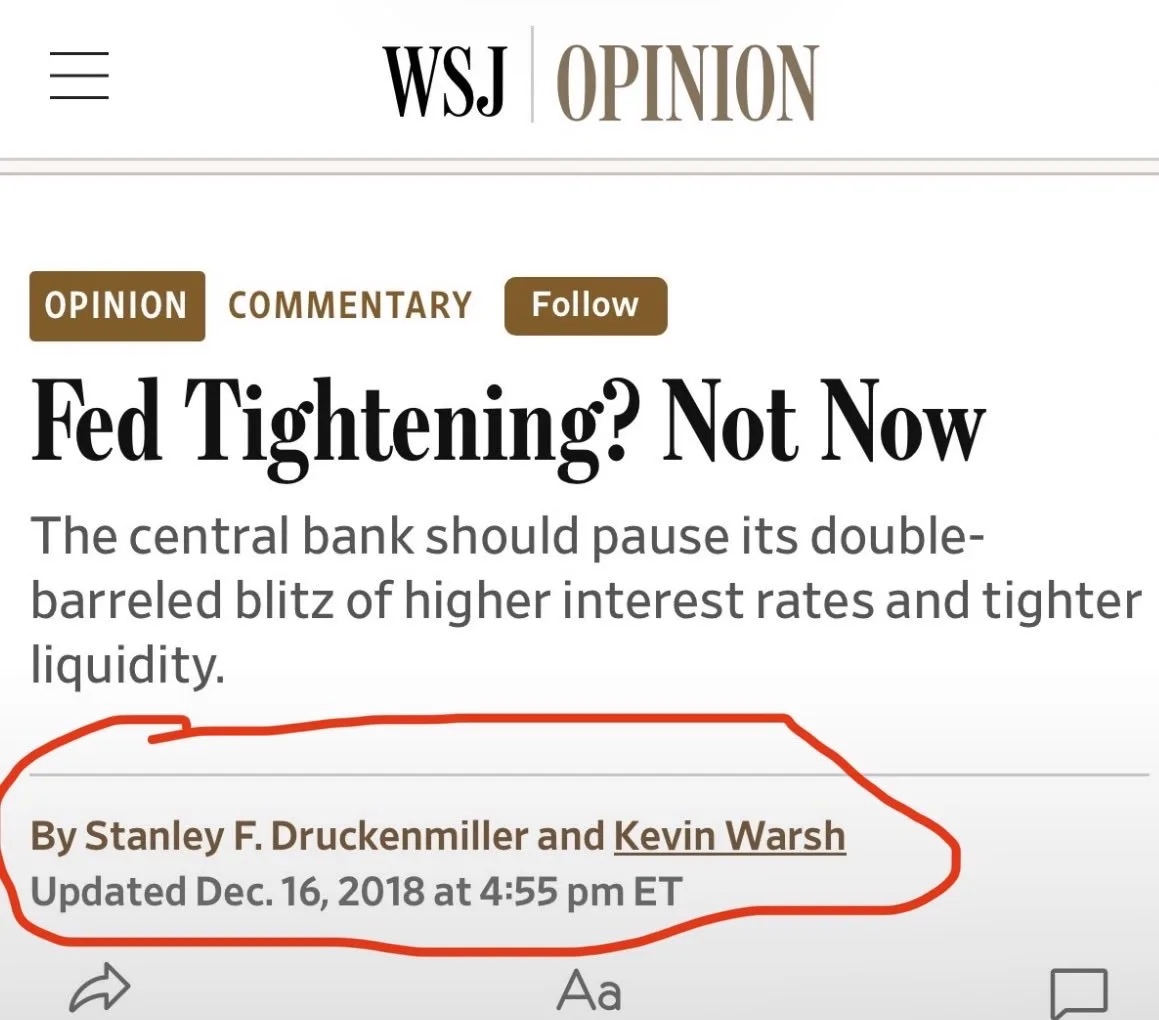
The narrative fight at the Fed, referenced in the video. Source: as shown on screen, September 1, 2026.
THE CHESS GAME
A story being managed in the open. A Fed figure was styled as the tough-guy inflation hawk, and in just three days the market’s bet on a rate hike this month jumped from 36% to 70%. The tough-guy act buys the Fed credibility — the kind of narrative move that’s about managing confidence, not just numbers.
THE ONE HONEST PLAYER
The bond market can’t be spun. Yields breaking out everywhere — the widow-maker cracking in Japan, rates at multi-year highs across the world — is the one player at the table that can’t be talked up. It’s telling you fear is coming.
THE BORROWED BUBBLE
$410 billion, borrowed at the wrong time. The companies building the AI boom borrowed about $410 billion this year alone, betting rates would fall. Rates are rising. That debt gets more expensive to service at the worst possible moment.
THE POINT FOR YOU
Behaviour beats opinion. You don’t have to guess. The people at the top can see the crack forming, and they’re positioning for it. The only question is whether you’re positioned too — or just assuming you are.
What This Means for You
A plan matters most when the headlines feel loud
THE BIGGER RISK ON TOP
The AI bubble. All of this — Japan cracking, the dollar on the same road — is landing at the same moment as the biggest speculative bubble since the year 2000. AI is real. But so was the internet — and that didn’t stop the crash.
THE HISTORY THAT SHOULD WORRY YOU
Real technology still crashed. The “can’t-lose” internet kings were Cisco, Yahoo and AOL. Two were basically vaporized; the third never recovered — and the technology was real the whole time. The NASDAQ fell 78% after 2000 and took 15 years to climb back.
MAKE IT PERSONAL
A 55-year-old with $100,000. That’s roughly the US average retirement pot. A 78% drop turns $100,000 into $22,000 — and history says it might not recover until you’re 70. This already happened to millions of people once.
THE RESPONSE
Don’t panic — get a system. Gold may be part of the answer
- if it’s the real thing. But the real fix is a simple, calm plan for your 401k, pension and retirement, so a crash becomes something you prepared for, not something that happens to you.
A quick word of credit.
If you’ve read this far, you’re already doing what 99% of people won’t — sitting with your own money long enough to understand it before anything goes wrong. Give yourself credit for that, and take the next small step below.
Turn Understanding into a Plan
Five questions to ask before the next
headline
Free live session — Survive The Bubble
survivethebubble.com
Felix walks you through how to protect your 401k, pension and retirement from the kind of crash history says is coming — and how to make sure what you
If I own gold, have I run the 2-minute test on page 9 to confirm it’s real, allocated, physical metal?
✓
Do I have 3 to 6 months of expenses set aside without having to sell investments?
✓
How much of my long-term savings is sitting in cash that quietly loses value every year?
✓
Am I overexposed to one crowded theme, like big-tech AI, without realising it?
✓
If the market fell 50–78% like it did after 2000, do I have a plan — or would I panic?
✓
Disclaimer
This report is for educational and informational purposes only and does not constitute financial, investment, legal, tax or accounting advice. It is not a recommendation, solicitation or offer to buy or sell any security, currency, commodity or financial product, and it does not endorse or criticise any specific fund. No buy/sell rating or price target is provided. All investments involve risk, including the possible loss of principal. Figures described here include third-party and on-screen sources that may require corroboration, may be revised, and may be wrong. Historical comparisons are illustrative and simplify complex events. Readers should verify figures independently, read any fund’s own documents, do their own research, and consult appropriately qualified professionals before making financial decisions. Past performance is not indicative of future results. The Prehn Institute makes no guarantee regarding outcomes.