Two things are happening at once. At home, the government is stepping in to buy back its own long-dated debt with money created that morning, doubling the size of the program and running it straight through November 4. Abroad, the most loyal buyer of American debt — Japan — is selling, and physical gold is leaving the country at a record pace. More paper money being made inside the country while the real money ships out the door: that is the whole story, and it lands on your savings.
Felix Nikolas Prehn is an economist and former investment banker, trained in London and Hong Kong.
Felix founded The Prehn Institute, where former Wall Street and City of London professionals teach. On his initiative the Institute runs a free financial education programme for U.S. military veterans. He co-founded TradeVision.io, a stock screening and charting tool.
Felix has appeared alongside Jim Rogers, Tom Bilyeu, and other prominent figures in finance and business. Yahoo Finance and the Associated Press have covered Felix and his work.
The Prehn Institute is an independent financial education institution founded by Felix Prehn, economist and former investment banker. It publishes research and provides instruction.
The Institute exists to raise the standard of financial education available to the public. Its published research is open to any reader, and its instruction is given by people who have worked in professional markets.
The Institute does not manage money and does not advise on investments. Its interest is in how markets work and in how professional practice may be taught.
Read it beside the video. The sections follow the same information, in the same order. The goal is not to predict the next tick in the price of gold. It is to explain, in plain English, why a dry line in a Treasury statement and a chart from Tokyo are really the same story — and why that story lands on your bank account.
The government is buying its own debt back. The Treasury is doubling the amount of long-dated debt it buys back and running it straight through November 4. Buying back long bonds means going into the market and taking that debt off everyone's hands — and the cash to do it gets created.
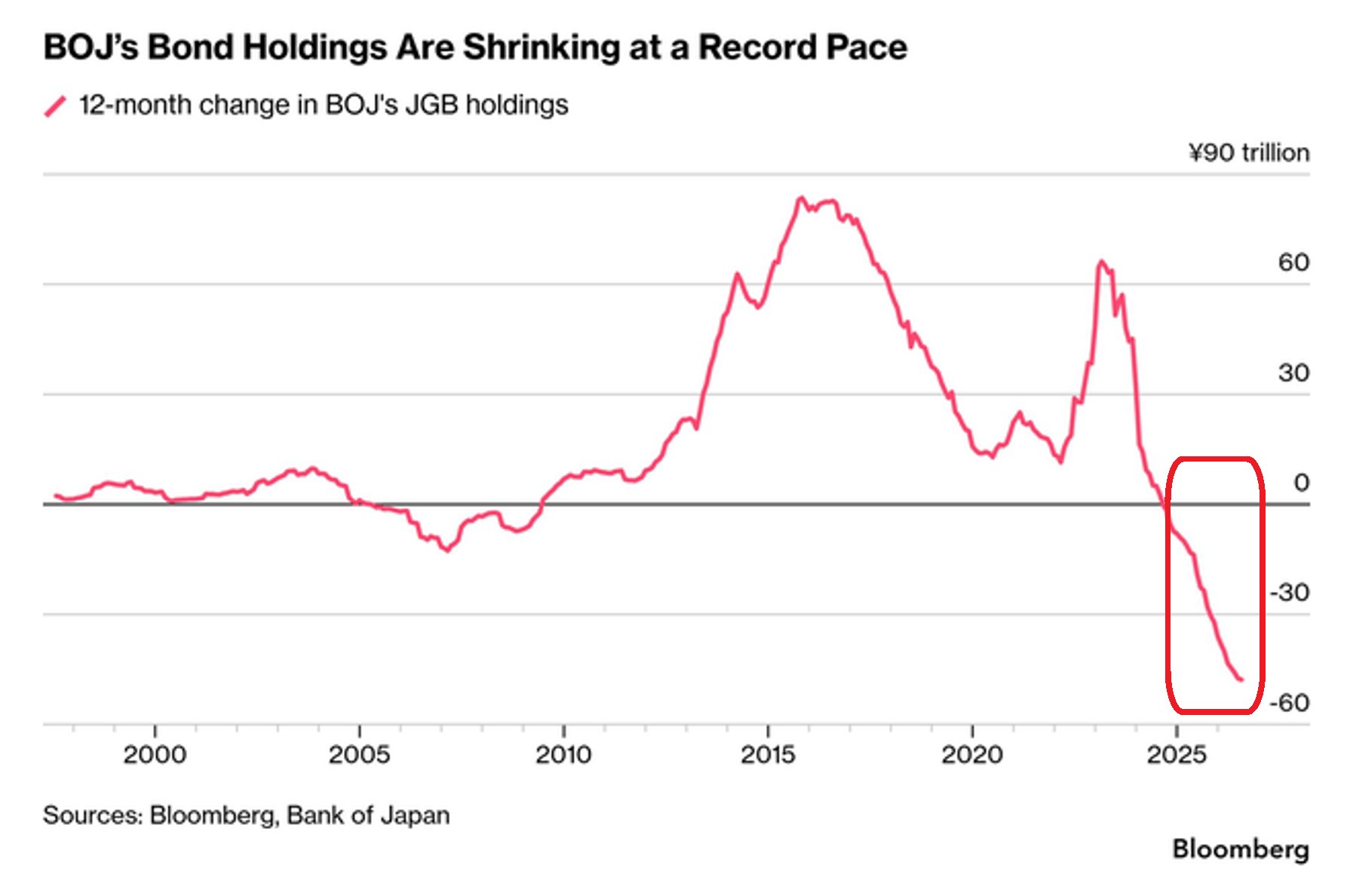
The most loyal buyer is selling. Japan — which has bought American debt faithfully for decades — sold almost 88 billion dollars of foreign securities in a single month, and its central bank is shrinking its bond pile at the fastest pace on record.
Gold is physically leaving. At the same time, gold has become one of the single biggest things America exports. The country that prints the world's money is shipping its actual money out the door.
More paper, less trust. When you make more of something while the rest of the world grows less keen to hold it, its value tends to slip. That is the setup — and it is already moving.
The buyback at home and the selling abroad are not two separate headlines. They are one story about the dollar — and the people who move billions are treating it that way.
Over 100% on the things that drain your account. Since covid, real-world inflation on your weekly shop, your rent, eating out and insurance has been well over 100% — the honest version, not the tidy official number. For a lot of people those costs have flat-out doubled. That is roughly half of your money's buying power gone in about five years.
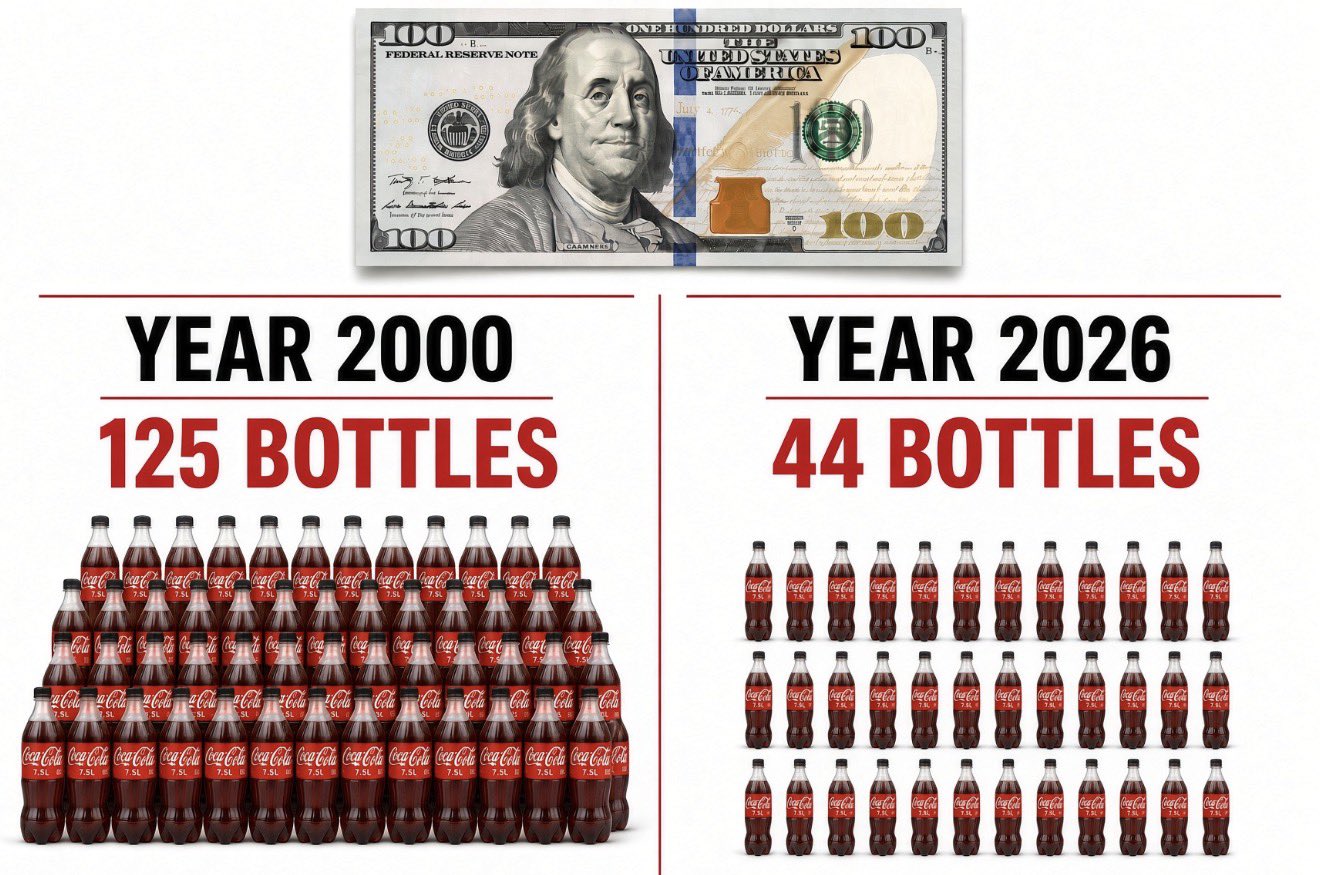
125 bottles became 44. One hundred dollars in the year 2000 bought about 125 bottles of Coke. Today that same hundred gets you 44. The drink did not change. The money did.
The dollar is down about 93% since 1971. A dollar from 1971 buys roughly 7 cents' worth today. That is what inflation actually is once you take the fancy words off it: the number in your account stays the same, it just quietly buys less, year after year.
They are lining up to do it again. Doubling the money printing straight through November is petrol on exactly that fire. The people who see it coming can get in front of it. The people who do not just wake up poorer and cannot work out why.
Doubled, and running through November 4. The Treasury has said it out loud — quietly, the way they always do. They are doubling the amount of long-dated debt they buy back and running it for two months, straight through November 4. When the government buys its own bonds back, it hands out cash. That cash gets created.
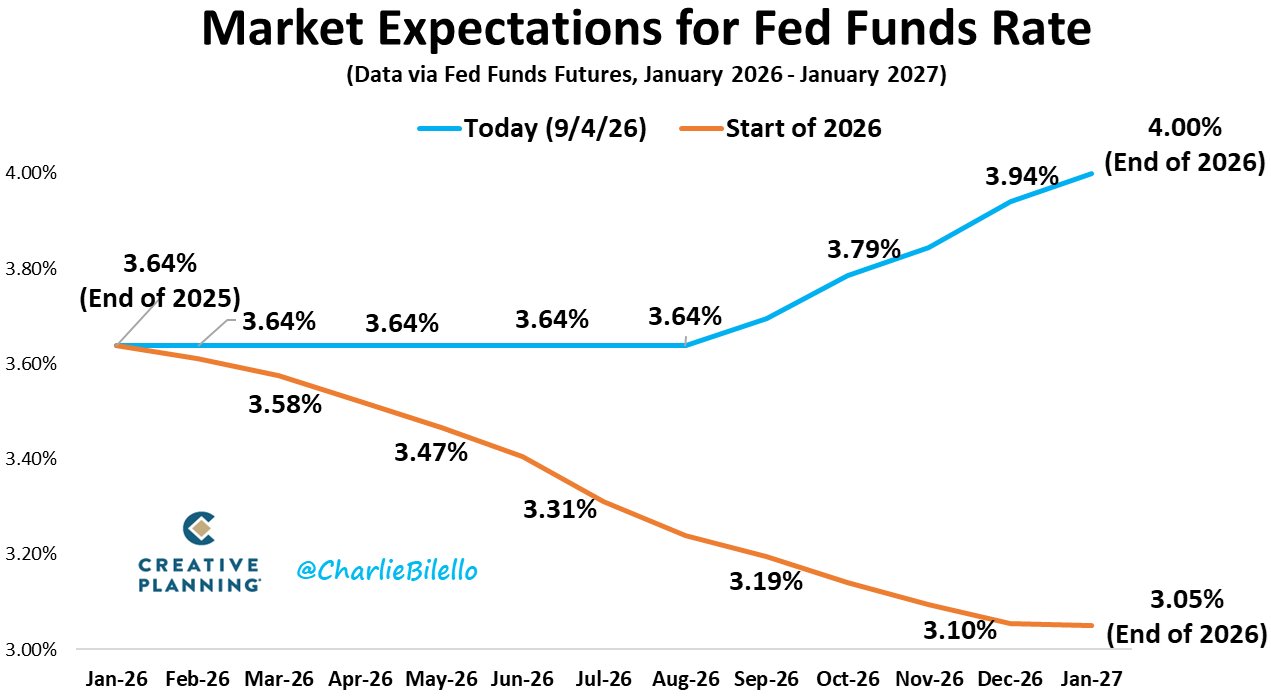
A meeting on the 16th and 17th. For most of this year the market was convinced rates were coming down — toward 3%, easy money. Now it has quietly changed its mind and is pricing rates going the other way, back toward 4%.
Two opposite things at once. Printing money to buy your own debt is about the loosest thing you can do. Bracing for rates to stay high is the tightest. Those two do not normally sit in the same room. When someone floors the accelerator and stands on the brake at the same time, something has gone wrong.
Watch how it gets announced. Not a prime-time speech — a dry line in a Treasury refunding statement on a slow afternoon, written in the most boring language possible so your eyes slide off it. Confident governments brag. A government doing something it would rather you did not examine buries it in a footnote.
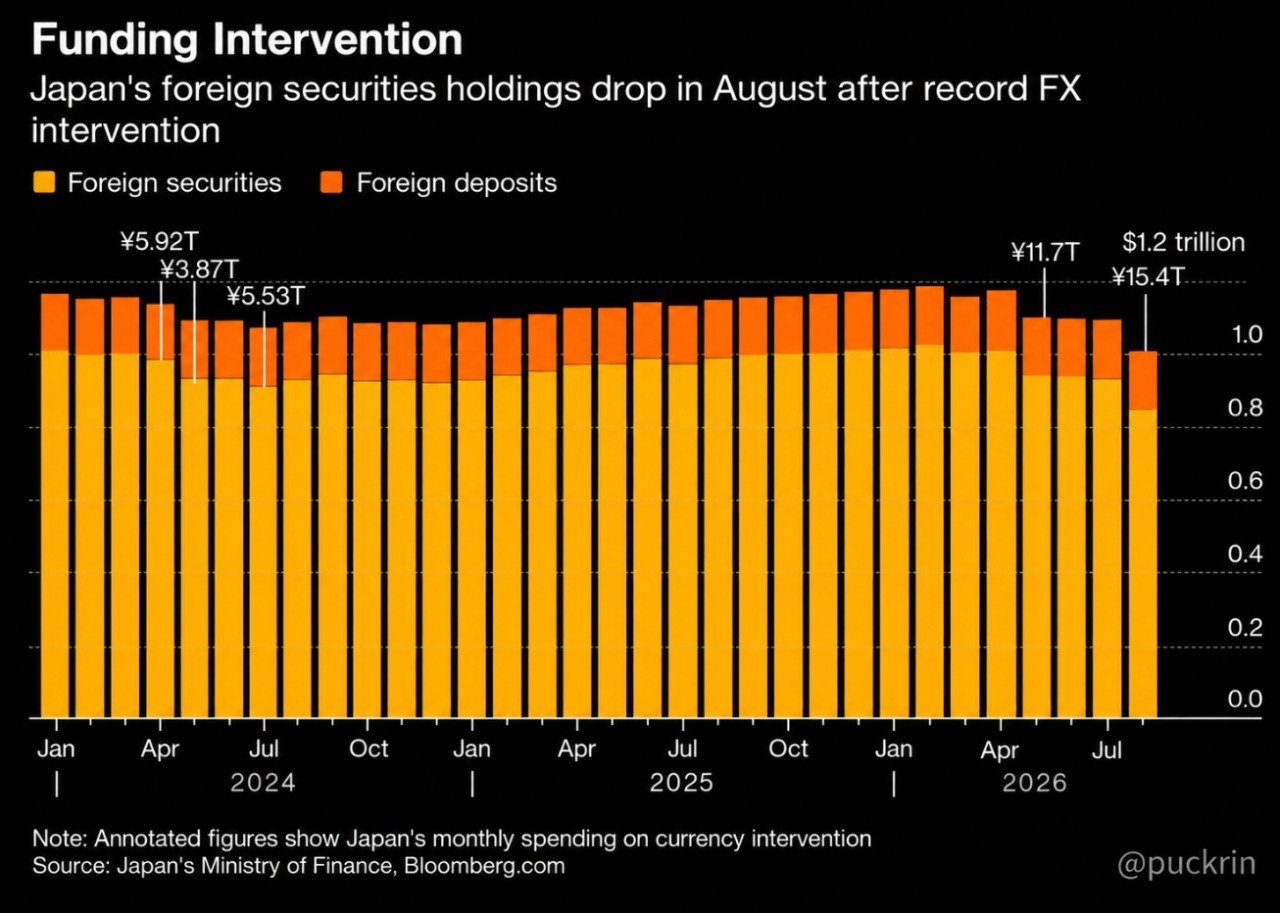
Almost $88 billion in a single month. Japan has been the most loyal buyer of American debt on the planet for decades. In August, Japanese investors' foreign holdings dropped by almost 88 billion dollars. That is not a trim around the edges — that is backing out.
Roughly 70% of Japan's reserves sit in US Treasuries. When the biggest foreign holder of your debt starts selling, someone has to step in and buy it — or the price of that debt falls and interest rates jump for everybody. You can guess who steps in. The printer.
About 15 trillion yen — near $98 billion. Japan spent something like that propping up its own currency through late August. When Japan is forced to sell Treasuries and defend the yen, money that had been parked in US markets gets pulled back home — and the cheap fuel holding markets up starts to drain away.
Coordinated for the first time since 1998. On July 31 the US and Japan acted together in the currency market for the first time in nearly 30 years. You do not get the two biggest economies linking arms like that when everything is fine. You do it when something in the plumbing is cracking.
More debt than there are willing buyers. The government issues IOUs. Normally the world buys them. But we have just watched the most loyal buyer start selling. Rather than let rates rip higher to pull buyers in — which would blow up the government's own budget — the printer fills the gap. That is what the buyback is.
Out of the dollars you already hold. Every new dollar created does not come from nowhere. Nobody writes to tell you. Your balance does not move. The number is the same tomorrow — it just buys less. It is a tax you never voted for and never see printed on a statement.
Around a trillion dollars of AI borrowing. On top of the government's borrowing, big tech is about to borrow something like a trillion-plus dollars to build data centres — an ocean of new corporate bonds hitting the market at the same time, all chasing the same buyers who are already walking away.
Watch what people with access actually do. The president has filed another huge batch of trades — well over 600. The pattern: leaning into boring toll-booth businesses (Berkshire, Visa, Mastercard, Home Depot, even Republic Services) that can raise prices and keep customers, while trimming hot, pricey tech. The people closest to the information are not betting on cash holding its value.
They are pulling their physical gold home. The Netherlands has been quietly moving its gold. France, Germany, one country after another bringing metal back onto their own soil, where nobody else can get at it. You do not spend real money flying tonnes of metal home if you completely trust the people holding it for you.
Gold is now one of America's biggest exports. Precious metals have gone from a few percent of US exports to a serious slice of them, at record levels. The country that prints the world's reserve currency is shipping out the one form of money you cannot print, fake or double through November.
1971, all over again. In 1971 the US quietly slammed the gold window shut — because too many countries wanted to swap dollars for the real thing and there was not enough gold to hand over. It was meant to be temporary. It has been 55 years. Same pressure: too much paper chasing not enough real money.
The paper falls, the real thing holds. Since 1971 the dollar lost about 93% of what it buys; over the same stretch gold went from 35 dollars an ounce to thousands. That is not a coincidence — it is the same event measured two ways. The point is not to gamble on gold to the moon. It is to not be the person holding the thing that is quietly melting.
Cash is an ice cube on a warm counter. It looks unchanged at first, but its buying power melts over time. This does not mean “hold no cash.” It means do not confuse short-term safety with long-term wealth storage — especially in the two months they have decided to turn the heat up.
The year the dollar came off gold. Until 1971 the dollar was tied to gold. Once that link was cut, governments could create dollars far more freely — and they did.
A slow, steady loss. A 1971 dollar has lost roughly 93% of its buying power. In other words, one dollar back then buys you about 7 cents' worth of goods today — and the buyback is designed to keep that going.
You cannot print it. Gold's whole appeal is that its supply grows slowly and no government controls it. When confidence in paper money is under pressure — exactly the moment we are in — that scarcity is what people want.
Sitting entirely in cash is a decision, too. It feels safe, but over long stretches it has been a guaranteed slow loss of buying power. That is the trade-off to understand before you “do nothing.”
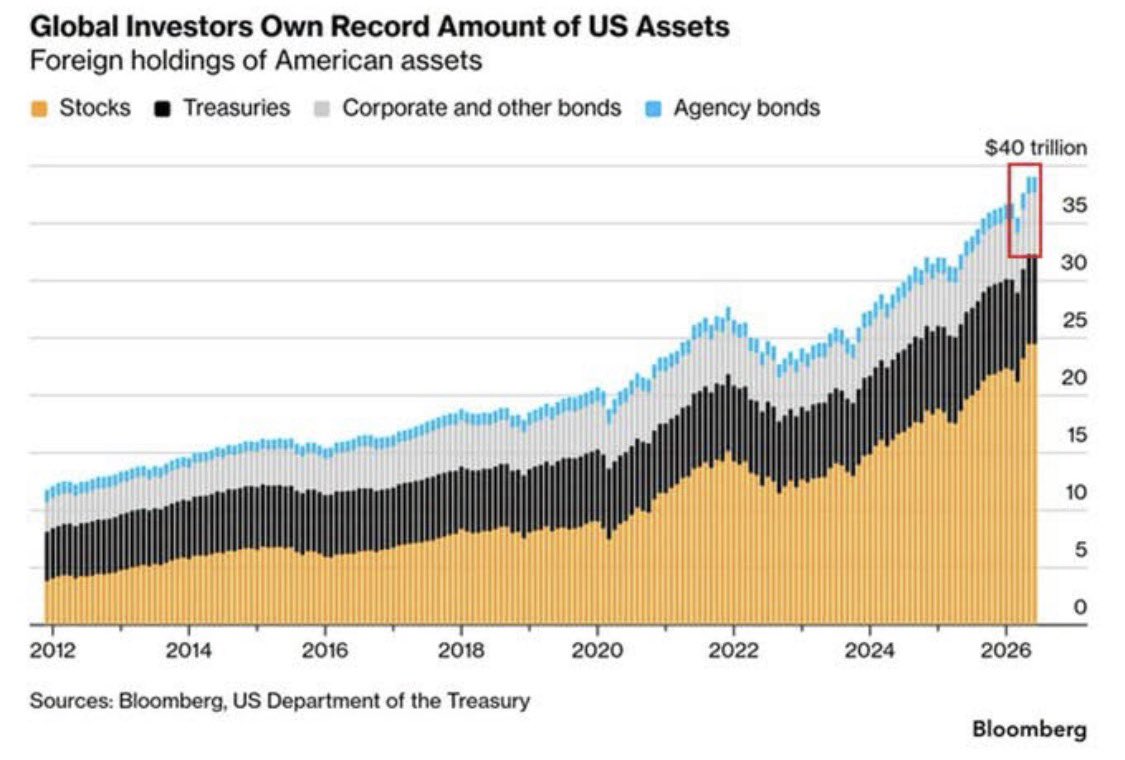
This gets misread constantly. “The world's backing away from the dollar, so sell everything American.” No. Foreigners still own a record amount of US assets — around 40 trillion dollars. The world is not abandoning America; it is rebalancing, slowly, at the edges. Panic-selling a slow story like it is a fast one is how normal people lose money.
Real pricing power. Businesses that can put their prices up when everything gets more expensive and keep their customers anyway — the toll booths. Real assets. Things whose value does not lean on the printer.
Not because someone shouted at you. A sensible slice, because it is the one kind of money that cannot be doubled through November. The point is not to bet the farm on a crash — it is to not be the one holding the thing that is quietly melting and calling it safe.
This is not financial advice. Felix is not a financial adviser and this is not financial advice. It is how he thinks about it, from what his Wall Street mentors drilled into him. You make your own call — but make it with a plan, before the headline, not after.
The Institute publishes research and provides instruction. Its published research is open to any reader, and its instruction is given by people who have worked in professional markets. The Institute does not manage money and does not advise on investments.
This report is for educational and informational purposes only and does not constitute financial, investment, legal, tax or accounting advice. It is not a recommendation, solicitation or offer to buy or sell any security, currency, commodity or financial product. No buy/sell rating or price target is provided. All investments involve risk, including the possible loss of principal. Figures described here include third-party data and estimates, may be revised, and may be wrong. Historical comparisons are illustrative and simplify complex events. This report is not political. Readers should do their own research and consult appropriately qualified professionals before making financial decisions. Past performance is not indicative of future results. The Prehn Institute makes no guarantee regarding outcomes.
Author: Felix Prehn, The Prehn Institute.