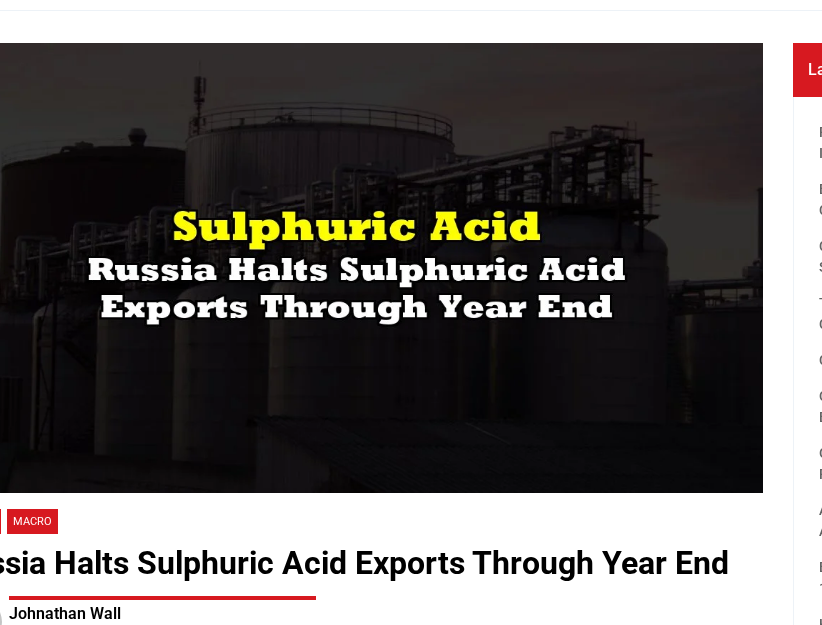
Russia banned sulfuric acid exports for the rest of the year. China throttled its own months earlier. Roughly half the world's sulfur comes from the Middle East and leaves through the Strait of Hormuz, the same 21-mile gap that carries a fifth of the world's oil. Oil is near $107. This report explains how an energy squeeze and a food squeeze arriving together point toward money printing, and what large institutions are doing in response.
Felix Nikolas Prehn is an economist and former investment banker, trained in London and Hong Kong.
Felix founded The Prehn Institute, where former Wall Street and City of London professionals teach. On his initiative the Institute runs a free financial education programme for U.S. military veterans. He co-founded TradeVision.io, a stock screening and charting tool.
Felix has appeared alongside Jim Rogers, Tom Bilyeu, and other prominent figures in finance and business. Yahoo Finance and the Associated Press have covered Felix and his work.
The Prehn Institute is an independent financial education institution founded by Felix Prehn, economist and former investment banker. It publishes research and provides instruction.
The Institute exists to raise the standard of financial education available to the public. Its published research is open to any reader, and its instruction is given by people who have worked in professional markets.
The Institute does not manage money and does not advise on investments. Its interest is in how markets work and in how professional practice may be taught.
Read it beside the video. The sections follow the same order and cover the same information. The goal is not to predict the next market move. It is to explain how events that look separate share one cause, and what large investors are doing about it.
An energy squeeze and a food squeeze are arriving at the same time, through the same narrow strait. When both hit together, prices rise, people worry, and governments tend to respond by printing money. That is the setup large institutions appear to be positioning for.
One chokepoint, two supplies. The Strait of Hormuz carries about 20% of the world's oil and much of the feedstock for the world's fertilizer. Pressure on that single point squeezes energy and food together.
Higher costs move everything. Oil sits inside transport, plastics, packaging and medicine. Fertilizer sits behind the food supply. When both rise, the effect reaches the weekly shop and the petrol pump.
Printing has a side effect. When countries also see the dollar used as a sanctions tool, some begin shifting reserves out of dollars and into assets no government can print or freeze.
Watch what large buyers do. Central banks and trading desks are buying gold in size. The report explains the chain of reasoning behind that behaviour.
| Headline | What the video describes | Connection |
|---|---|---|
| Russia bans sulfuric acid exports | Export halt through the end of the year, after China throttled its own months earlier | Fertilizer feedstock tightens |
| Hormuz under strain | Roughly half the world's sulfur and a fifth of its oil pass through one 21-mile strait | Energy and food squeezed together |
| Oil near $107 | Up about 60% on a year earlier | Costs rise across the economy |
| Dollar used as a tool | Sanctions programme threatens removal from the dollar system | Foreign holders look for alternatives |
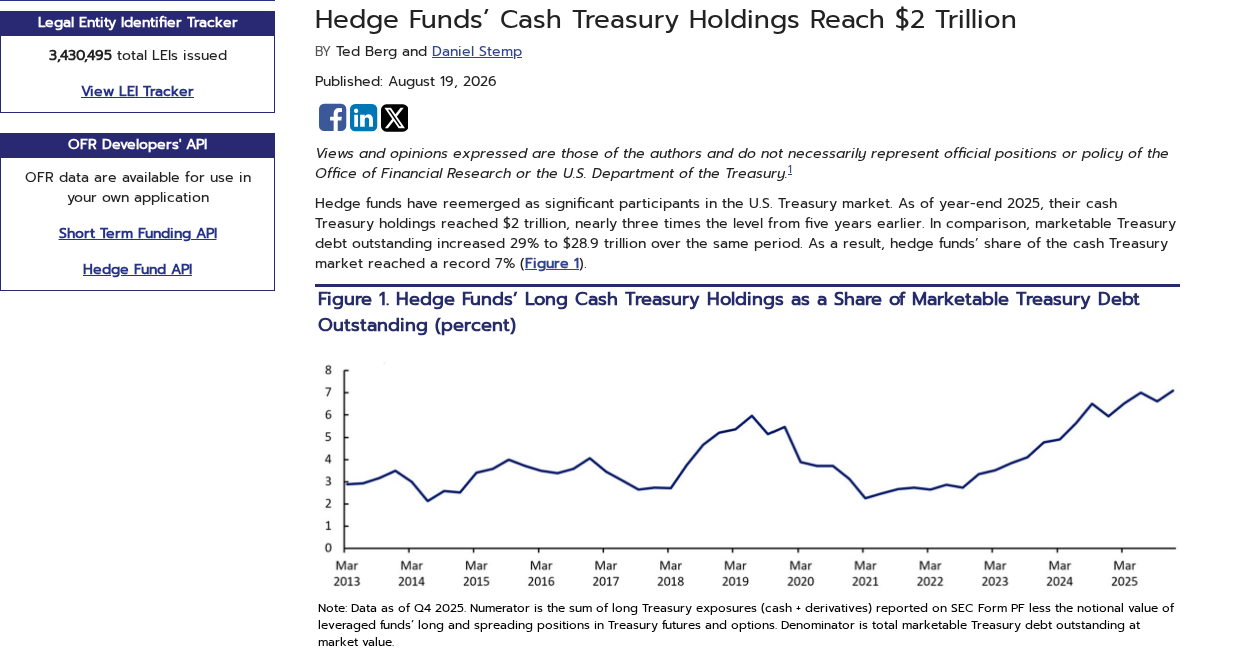
| Hedge funds loaded on Treasurys | About $2.2 trillion held, much of it leveraged | Forced selling risk if volatility spikes |
The video does not treat these as unrelated accidents. It treats them as evidence that an energy squeeze, a food squeeze and a stressed bond market can move together and point toward the same policy response.

It is not optional. Sulfuric acid is required to process copper, nickel and uranium, and to make fertilizer. Without it there is no fertilizer at scale, and fertilizer grows the food that feeds the world.
China first, then Russia. The two largest suppliers both stepped back from the export market inside the same six months. That removes a large share of available supply at once.
There is no easy substitute. The video notes that remaining producers are limited and constrained, so the gap cannot simply be filled from elsewhere at scale.
The Strait of Hormuz is about 21 miles wide. Around 20 million barrels of oil pass through it each day, close to a fifth of world supply, alongside much of the sulfur that becomes fertilizer. One pressure point now sits on top of both.
Everything that moves burns fuel. Lorries, ships and planes all cost more to run, so goods cost more to deliver. That shows up at the pump immediately and on the shelf soon after.
Oil is in more than fuel. Plastics, packaging, cosmetics, medicines, synthetic fabrics and road surfaces all draw on oil. When it sits near $107, those costs drift higher too.
Energy is one squeeze. The second squeeze, fertilizer, is what turns a familiar oil-price story into something larger. The next page follows that chain.
A working example. The video quotes a vineyard operator who uses sulfuric acid to adjust soil pH, treat irrigation water and keep drip lines clear, getting through thousands of litres. For growers this is routine, not abstract.
Supply feeds price. With Russia and China both restricting exports and Middle East supply hard to move, there is little slack. Lower yields tend to lift food prices.
Food is the red line. Food shortages reliably threaten governments, so the video's expectation is that policymakers subsidise, and funding subsidies often means printing.

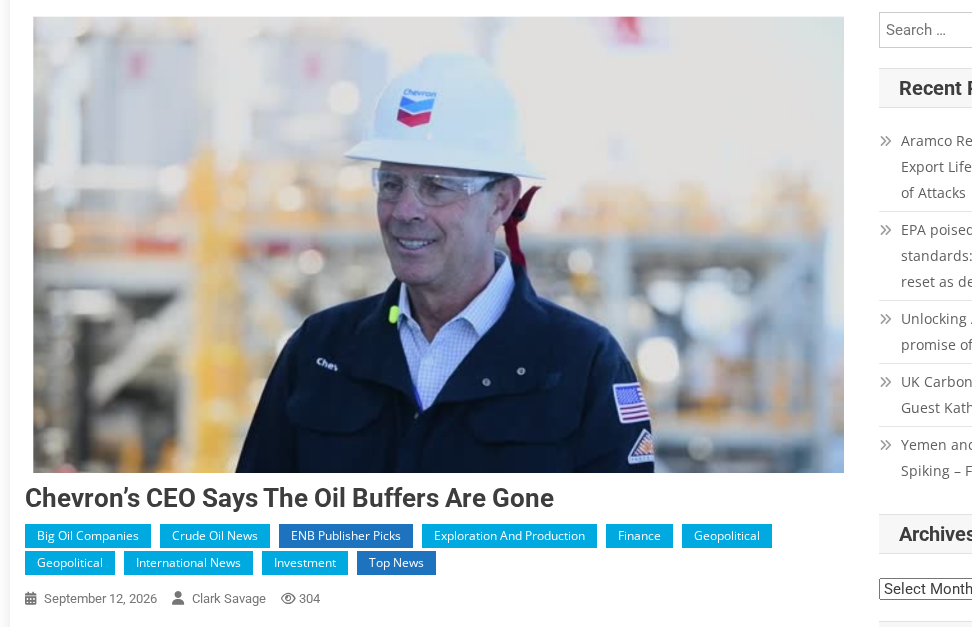
A named executive. The head of one of the world's largest oil companies said on record that the crisis oil executives had warned about has arrived, and that the system holds far smaller buffers than when the war began.
Supply is the limit. The video notes public pressure to bring prices down, but the point is that the spare supply that used to absorb shocks is no longer there, and Hormuz is a large part of why.
Here now, not coming. When the operator at the centre of the industry says the buffers are gone, the squeeze is a present condition rather than a future risk.
Alongside the acid ban and the oil squeeze, the video describes a sanctions programme that threatens to remove any country helping Iran from the dollar system. When a currency is used as a weapon, other countries begin to ask whether they could be next.
Access can be switched off. A programme that can remove a country from the dollar system turns the currency from neutral plumbing into leverage.
Reduce the dependency. The rational response for an exposed country is to hold fewer dollars and more of something that cannot be frozen or printed.
Gold and independent systems. The video links this directly to record central bank gold buying and to payment systems being built to avoid the dollar entirely.
Energy, food, currency. Large investors read $107 oil as inflation through energy, a fertilizer crisis as inflation through food, and a weaponized dollar as softer demand to hold dollars.
Printing is the likely response. Rising prices plus a stressed bond market point toward more money creation, which is the environment where hard assets tend to hold value.
Buy what cannot be printed. The response the video describes is to own hard assets and to reduce holdings that quietly lose value when printing begins.
The moves are visible. Central banks bought about $22 billion of gold in three weeks. A desk placed a bet on silver reaching $90 within three months. Hedge funds sit ready to sell $2.2 trillion of Treasurys.

Fast money. Hedge funds now hold about $2.2 trillion of Treasurys, close to three times the level of five years ago. Unlike pension funds, they move quickly and sell when volatility rises.
A thin margin, heavily borrowed. Much of the position is a leveraged basis trade: buy the bond, sell the future against it, and borrow many times over to earn the small gap. It works only while markets stay calm.
Calm can end quickly. If the two prices move against them, funds must unwind at once, selling government bonds into a market that has suddenly lost buyers.
Two bad options. If the Fed lets yields rise, the government's interest bill becomes unpayable. If it buys bonds to push yields down, it is printing, which feeds inflation.
Protect the bond market first. The video's reading of history is that policymakers choose to defend the Treasury market every time, which means printing and a quieter erosion of purchasing power.
The tools are loaded. The Treasury doubled a buyback programme from $2 billion to $4 billion an operation and holds around $1 trillion in cash for it. Long-term rates are near their highest since 2007.

Back above the trend. Gold fell early in the year, then crossed back above its long-term trend line for the first time since 2023. Many large funds have rules that begin buying on exactly that crossover. Gold trades near $4,600 in the video.
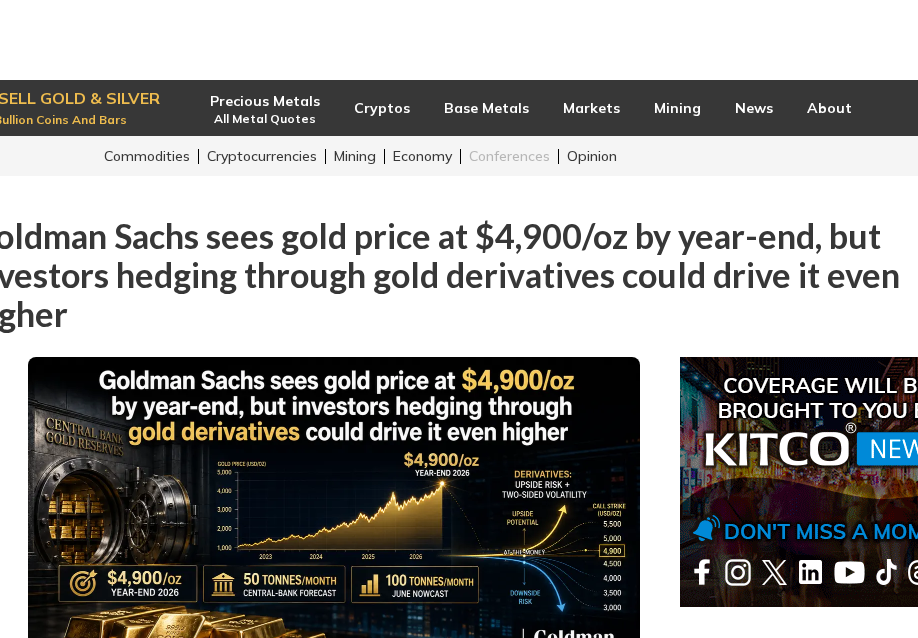
$4,900 by year-end. Goldman Sachs put a year-end target of $4,900 on gold and noted significant upside risk beyond it. This report repeats that as a cited forecast, not a promise.
Bets that feed themselves. Goldman described heavy call-option activity as a mechanical price amplifier: sellers of those options buy gold to cover, which lifts the price and draws in more buying.
Silver often sits still for long stretches and then moves late and hard. The market is small next to gold, so when large money arrives there are not enough sellers, and the price has to jump to find them.
Thin supply. Because the silver market is small, incoming demand meets few sellers, which is why moves can be sharp once they begin.
Real size behind it. A trading desk placed a call option betting silver reaches $90 within three months, from around $31. The video presents this as where some professional money is positioned, not as a certainty.
Check the chart yourself. In the video, Felix pulls up gold and silver in the Winston app so viewers can see the setup directly.

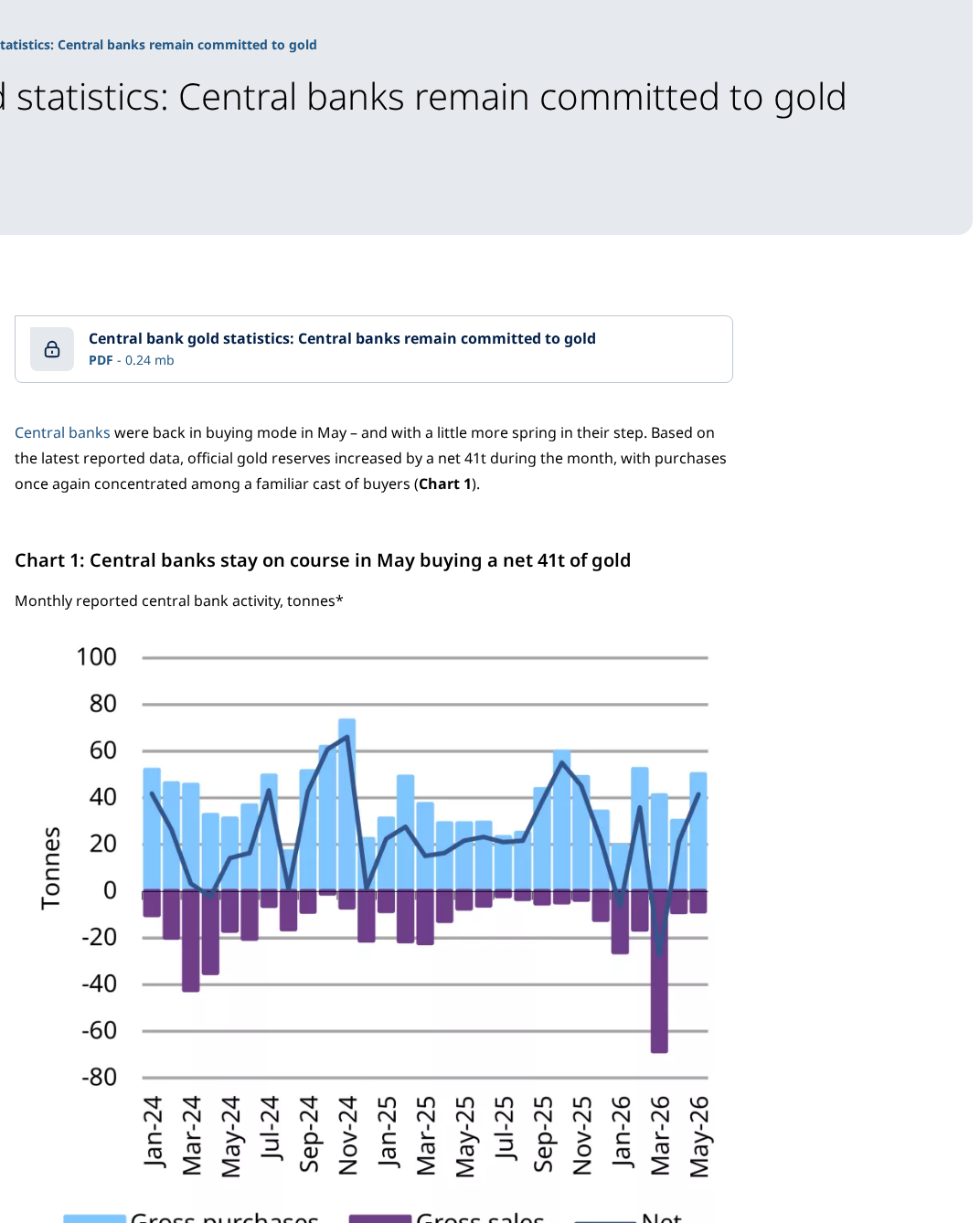
$22 billion in three weeks. Professional traders and funds bought about $22 billion of gold futures in three weeks, described in the video as a ten-year record.
A broad list. The World Gold Council's data shows Poland as the most aggressive known buyer, China in a third straight year of large net buying, Singapore doubling reserves, and the Czech Republic, Chile, Bolivia and Uruguay adding.
"We don't trust what's coming." That was the reported answer from the head of Poland's central bank. The one notable seller is Russia, which the video says is selling to fund a war.
Since the dollar left the gold standard in 1971, a dollar has lost almost all of its purchasing power. Holding cash through a printing cycle feels safe, but its value can quietly erode while nothing appears to change.
Cash is an ice cube on a warm counter. It looks unchanged at first, but its purchasing power melts over time. This does not mean hold no cash. It means separate short-term safety from long-term wealth storage.
Off the gold standard. Once the dollar was no longer tied to gold, more of it could be printed. A dollar from 1971 is worth only a couple of cents today, on the government's own inflation figures.
Prices, not quality. Hotel rooms that were $200 briefly reached far higher without the hotels changing. That is printing showing up in prices.
The tools are public. About $1 trillion sits in the Treasury account, the buyback programme has been doubled, and a weaponized dollar makes foreign countries warier of holding US debt.
Supply up, demand down. More dollars created while fewer countries want to hold them is the textbook setup for inflation.
The early movers. Central banks, funds and insiders already own gold, silver and real businesses that generate cash. Sitting in cash through the printing is, in the video's phrase, standing in the rain wondering why you are wet.
Prepared or surprised. The video contrasts those who learned this while gold was around $4,300 and acted, with those who waited for the headlines and bought after the move at prices that already include the news.
After World War II, US debt passed 120% of GDP. In 1942 the Federal Reserve agreed to print whatever it took to hold long-term rates near 2.5%. The debt ratio fell over the following decade, but inflation ran from around 10% up to 20% by 1947, halving the purchasing power of careful savers.
| Then (1940s) | Now |
|---|---|
| Debt above 120% of GDP | Debt around the same level |
| Fed pins rates to protect the budget | Fed boxed between rates and solvency |
| Printing to buy government bonds | Buybacks and cash firepower loaded |
| World trusts the dollar, no alternative | An alternative system is being built |
The careful savers. Not the people who lost jobs, but those with money in the bank and in government bonds. The response to the debt problem quietly melted their savings, a little at a time.
Higher stakes. In the 1940s there was no alternative to the dollar. Today one is being built, backed by more than 6,000 tons of gold between the countries behind it.
The video's conclusion is that the playbook is the same as the 1940s, but the added factor of a rival system backed by gold makes the stakes higher. The point is preparation, not prediction.
The Institute publishes research and provides instruction. Its published research is open to any reader, and its instruction is given by people who have worked in professional markets. The Institute does not manage money and does not advise on investments.
This report is for educational and informational purposes only and does not constitute financial, investment, legal, tax or accounting advice. It is not a recommendation, solicitation or offer to buy or sell any security, currency, commodity or financial product. No buy or sell rating and no price target is provided. All investments involve risk, including the possible loss of principal. Market events, relationships and historical comparisons described here may not repeat. Illustrations simplify complex systems and may omit factors. Cited forecasts, such as the Goldman Sachs gold target, are the views of those third parties and not guarantees. Readers should conduct their own research and consult appropriately qualified professionals before making financial decisions. Past performance is not indicative of future results. The Prehn Institute makes no guarantee regarding outcomes.
Author: Felix Prehn, The Prehn Institute.